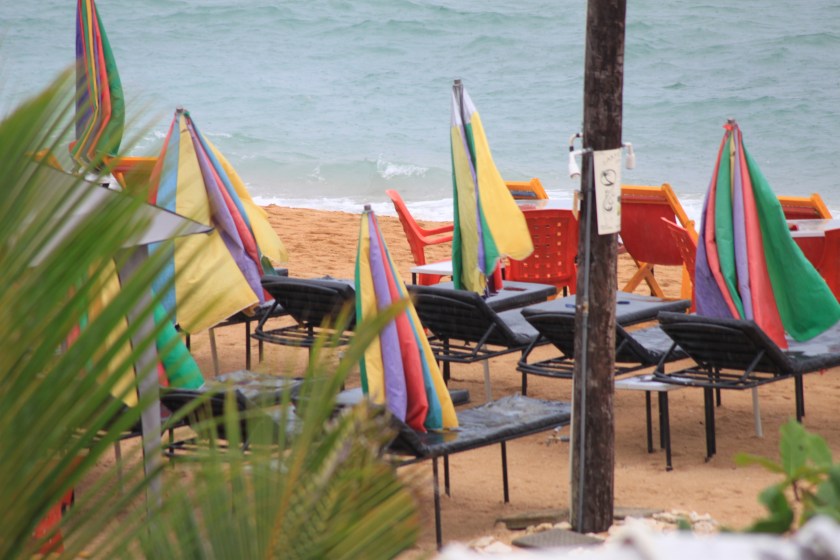
I’ve lost track of the number of times during my travels I’ve heard local people say : “the weather shouldn’t really be like this now. It’s the dry season” Well, trust me, it isn’t. I had hoped that yesterday’s downpour was just a temporary blip but this morning it was still chucking it down and the wind was howling. Needless to say, the sun loungers and deck chairs were not busy.
 I busied myself with bits and bobs of paperwork, catching up on emails etc this morning after which I decided not to give in to the elements so I asked a tuk tuk driver to take me somewhere dry! After a bit of negotiation, we settled on a visit to a tea factory which I have to say was fascinating as I doubt the manufacturing process has changed much in hundreds (if not thousands) of years.
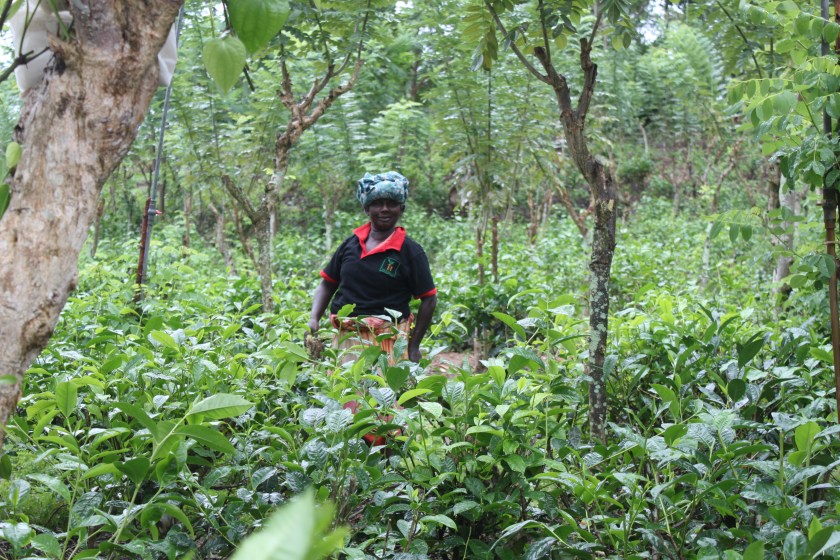
Tea plantations can be worked 365 days a year – and in the rain too.
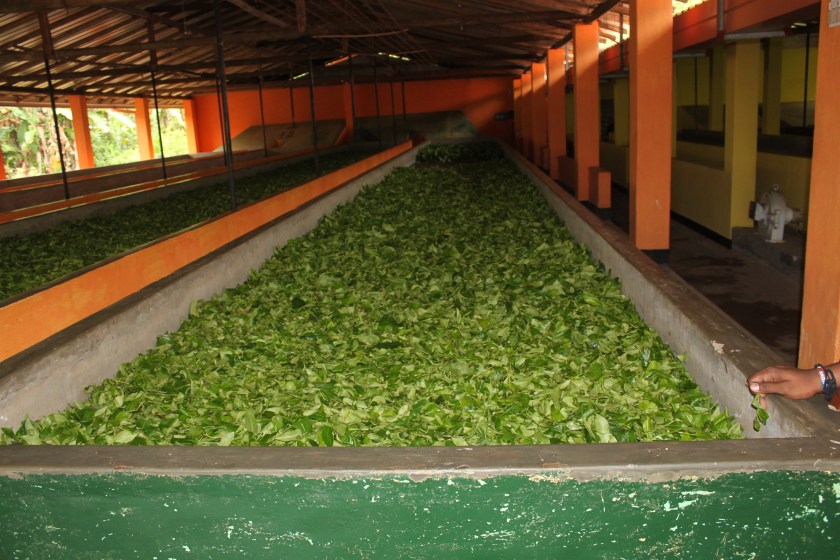
Once the leaves are picked they are left to ‘rest’ for a few hours to reduce the moisture content by 50%
 after which they move on to the grinding machine were the leaves are broken up into small pieces.
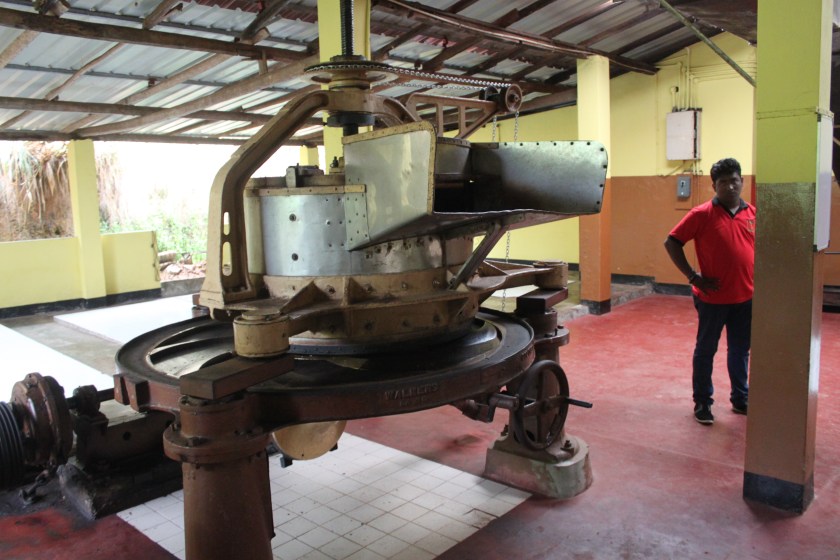 The drying process comes next which is done on a machine that should really be in the Science Museum! It’s 145 years old and still going strong.
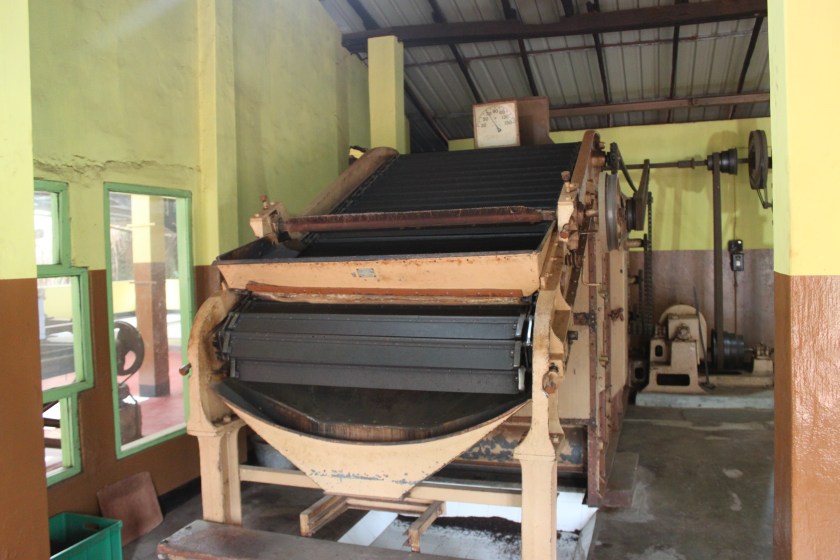 Made in the UK, of course, by the same Belfast company that built the Titanic , I was told.
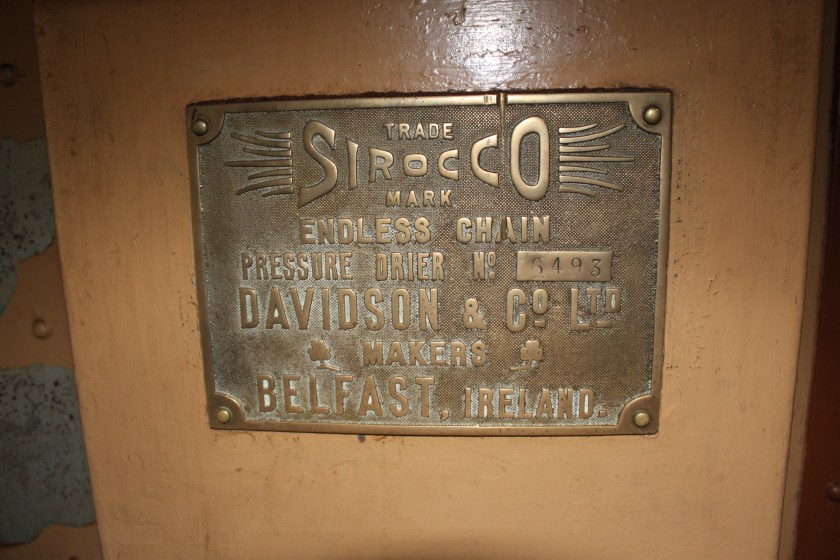 Note that the name plate merely states ‘Ireland’ as, of course, it was in those days.
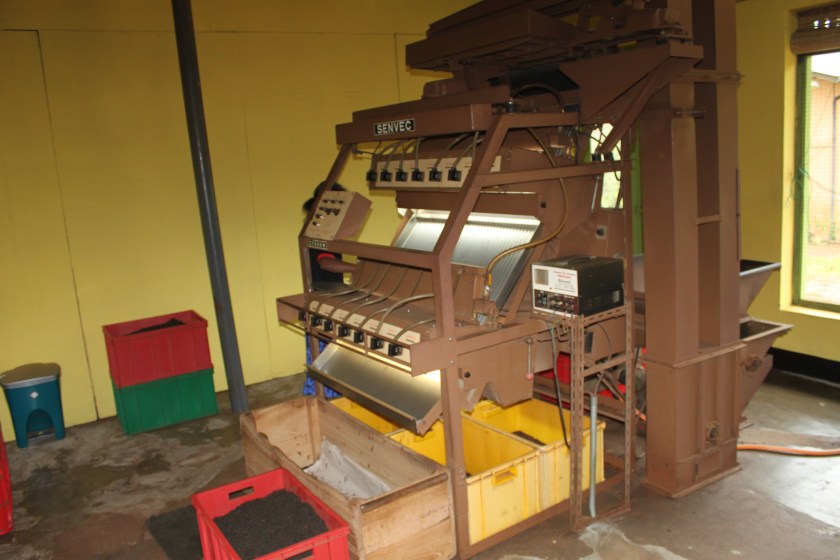 The only modern piece of machinery is Japanese and which electronically sorts the leaves by colour after they have been sorted by size. The smaller the leaf, the stronger the tea seems to be the general rule. The final step is to put the various shades and grades of tea into large bags, take them to the wholesale market in Colombo where they are sold to the likes of Liptons. Typhoo etc who do the final packaging and marketing. Well, I thought it was interesting and it certainly beat staring out of my bedroom window at the rain!
Apart from tea, rice is another big industry in Sri Lanka
 as is cinnamon.
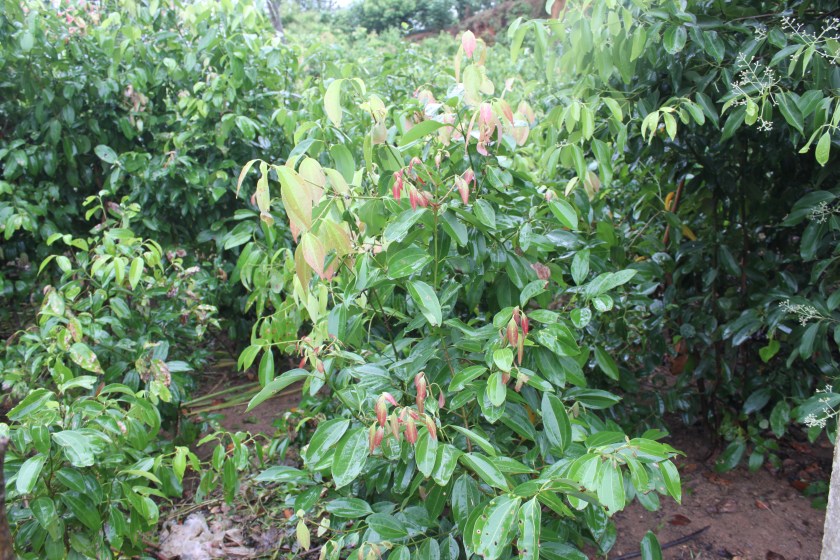 The cinnamon bush (tree?) doesn’t grow very tall but the aroma that a plantation – even a small one – gives out is wonderful. On the way back to my hotel, as the rain had eased a little, Mr Tuk Tuk made a diversion and took me to a small island inhabited by only 5 related families all of whom grow cinnamon bushes.
Firstly, the outer bark skin is removed from the branches
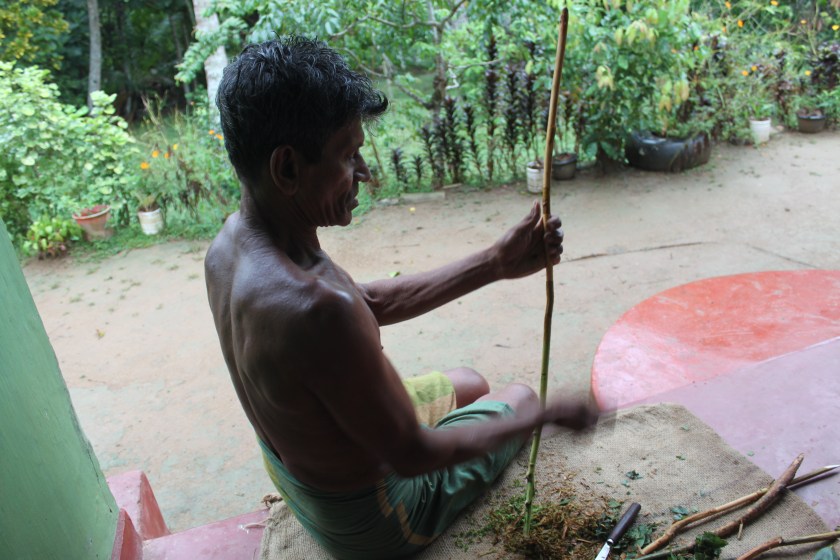 after which the inner bark is peeled off leaving the branch which is used largely for firewood.
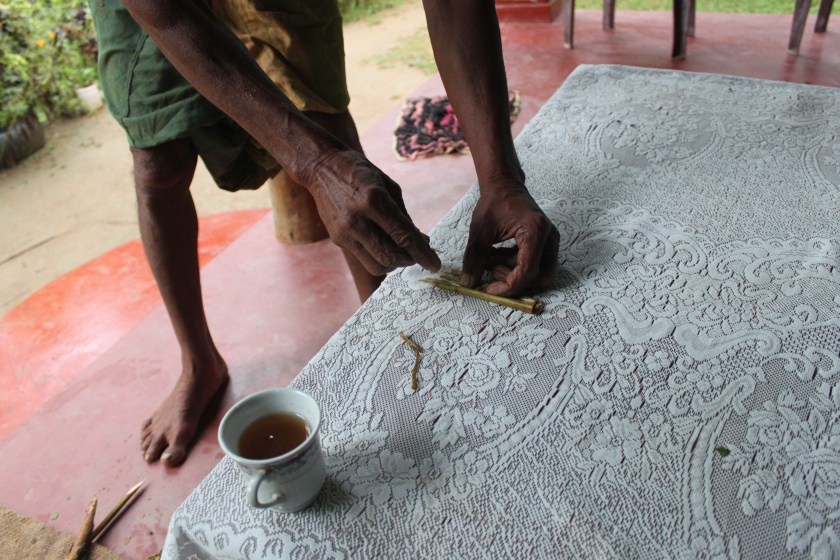 The largest piece of inner bark is then filled with smaller pieces which are left to dry when the colour changes to brown and, hey presto, you have cinnamon sticks! Powdered cinnamon is merely ground cinnamon sticks.
Had it not been raining, probably I would never have had this adventure. I’m so glad I did but it would be nice if the sun shone – even for a little bit – tomorrow.
Phileas
 thelasthurrahsite