Isan (pronounced ‘Eesan’) in north east Thailand is the country’s largest region but it’s also the nation’s poorest. Whilst it houses just over 1/3rd of the entire population it only contributes around 10% of the national GDP. And at the same time that Bangkok with 17% of the country’s population enjoy’s 72% of the government’s expenditure, incredibly, Isan with double the population gets less than 6%!! Clearly, regional development is not top of the Thai government’s priorities and so the region really struggles to provide even the most basic of services. For example, as a local government cost cutting exercise, the weekly collection of rubbish in the rural villages was stopped last year.

It is now left to the residents to dispose of these items in any way they see fit e.g. burying or burning including all the plastic bags, of course. Talk about a trip back to the dark ages!
As an aside, the only advantage of this state of affairs that I have come across yet is that living costs are cheap. My hotel room which is more than acceptable and includes breakfast
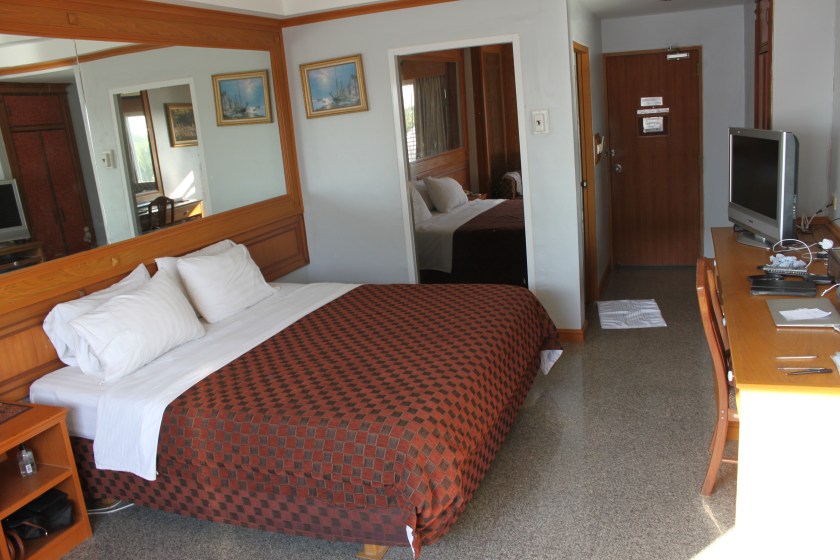 costs £15 per night!!
There is no tourism here. There is a bit of a craft industry making chairs, mainly for the surrounding temples
 but what involves most of the population is agriculture- some rearing of these strange
 long eared cows but mainly in rice farming – acre upon acre of it
 or, rather, what remains of it as the current crop has just been harvested.
Normally, the area where I am staying is quite fertile and if conditions are right it’s possible to obtain 3 or four harvests a year thanks, largely to a good supply of irrigation water from the local river. This year, however, has been a disaster for many as flooding destroyed vast areas of these crops.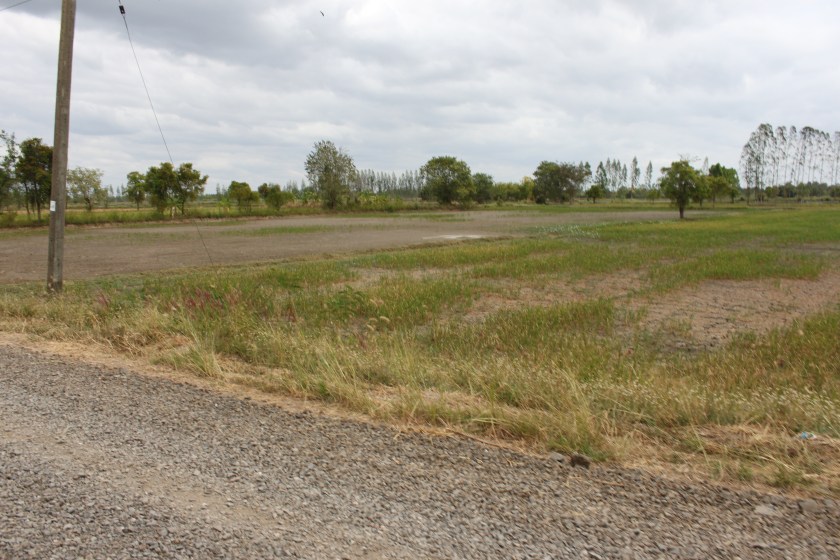
It was possible to dry out some of the harvest
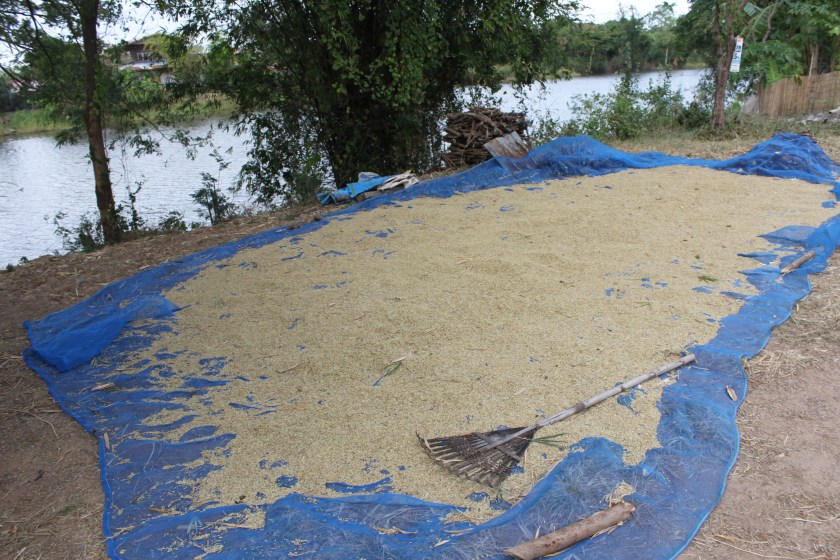
but a lot had to be destroyed.
So, with the next crop not due for harvesting (and thus, sale) until March next year, the local peasant farmers and their families have to survive, somehow, with no income for 4 or 5 months. As the banks don’t seem to be so keen on cash flow lending it’s left to the local village money lenders to come to the rescue of these poor impoverished folk and making a good turn for themselves in the process, often charging 10% per month for an unsecured loan to, perhaps, their next door neighbour!
Despite the extraordinary hardship most of the locals have to endure, there is an incredibly strong sense of ‘family’ and camaraderie amongst these folk
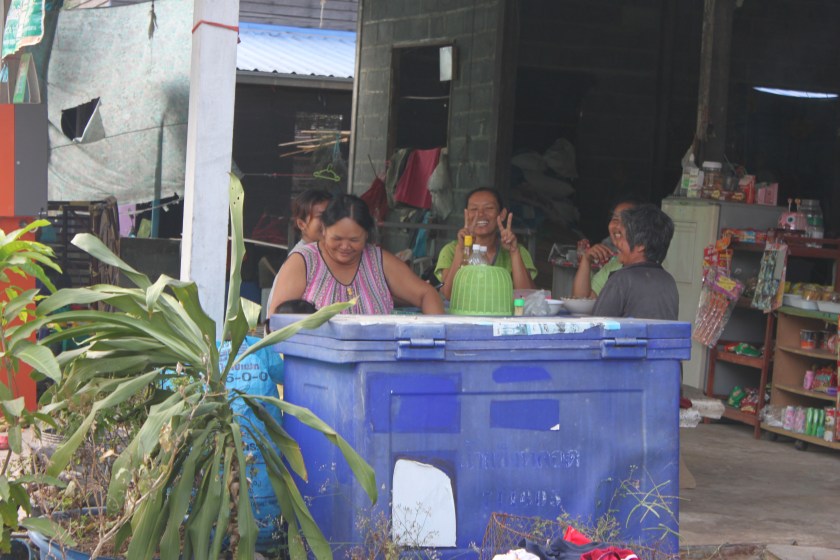 and the children seem happy enough in the main.
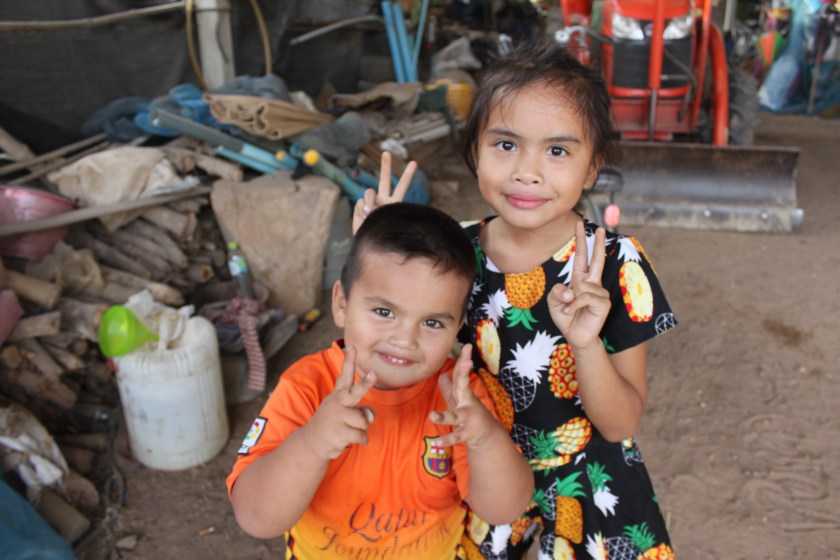
But it’s a tough, tough life for most, just eking out a very basic existence and with no social security, just praying that they stay healthy enough until their children can take care of them.
 This is their lot. This is the real Thailand!
Phileas.
 thelasthurrahsite