Courtesy of a British Airways price promotion, a direct flight took me to Bangkok this time. A journey of just over 11 hours as opposed to 15+ with a transit somewhere makes a big difference. So I wasn’t feeling too bad on arrival until I hit the usual horrendous traffic congestion between the airport and the downtown area. Some things never change! Putting that aside, the sights, sounds – and smells – of Bangkok always delight
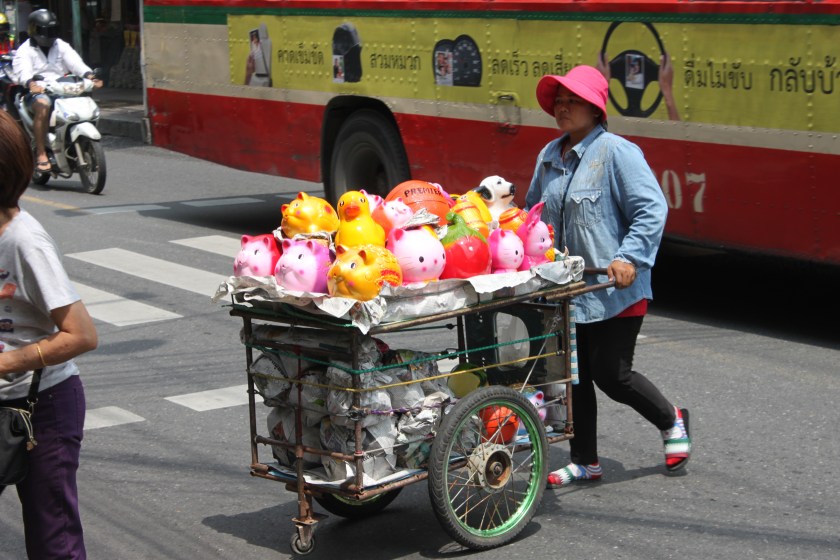
as does the inexpensive and (surprisingly) delicious street food.
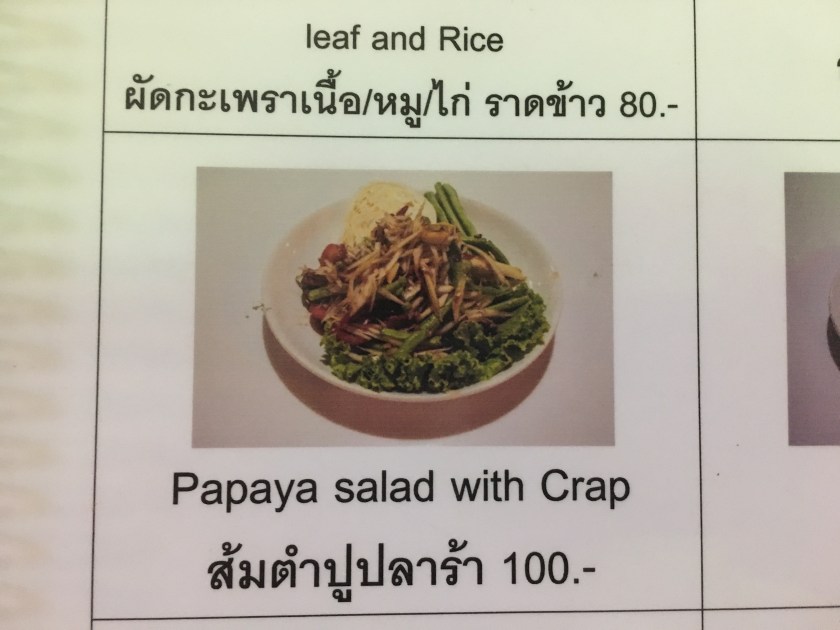
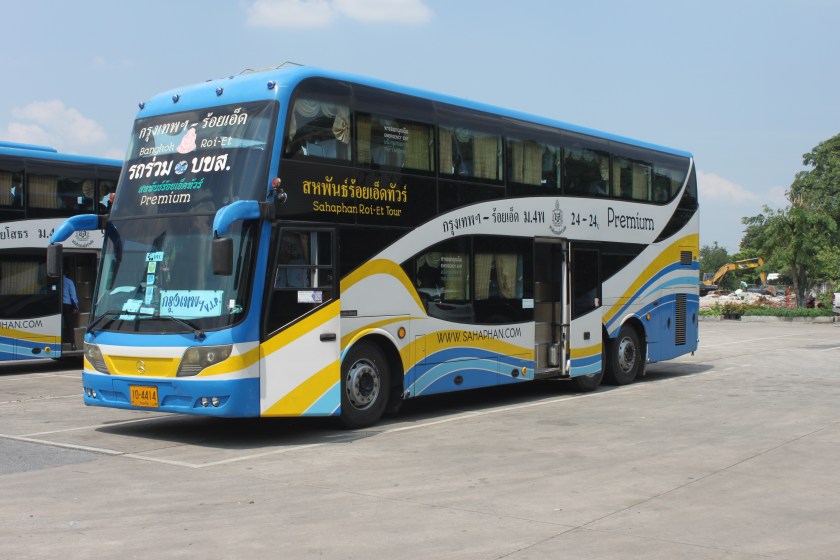
A few days spent dodging the rain storms (it’s still the rainy season) and it was time to head north east to Maha Sarakham in the Isan province. In the interests of both economy and curiosity, a 7 1/2 hour bus journey was chosen which turned out to be surprisingly comfortable albeit long!
 Apart from a relatively small hilly area about 2 hours north of Bangkok
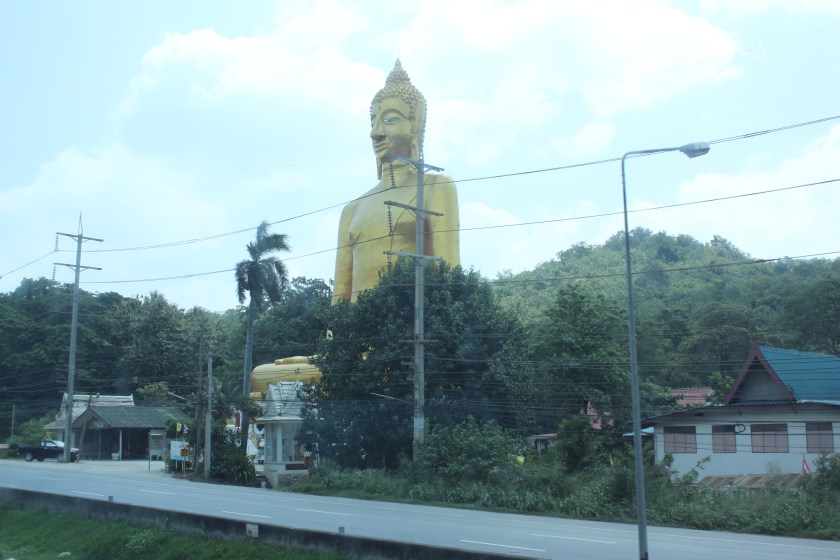
the topography in this part of Thailand is, I’m afraid to say, pretty flat and boring interspersed with a bit of interest created by the frequent police check points
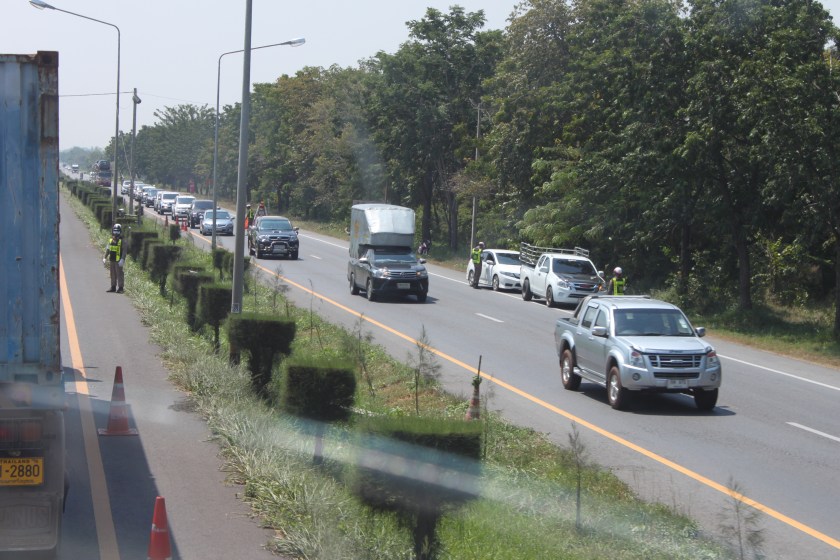
and the splendid array of food available at the service stations.
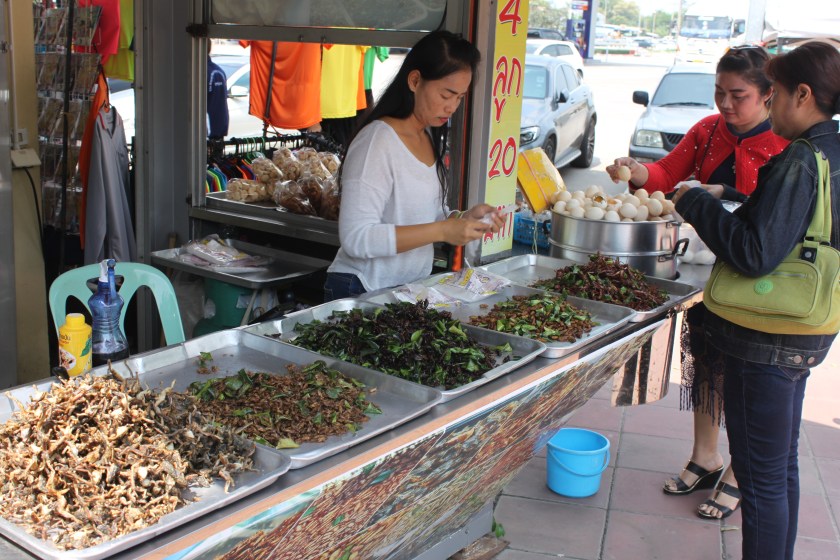
Having said that I wasn’t tempted by this offering of locusts, grasshoppers and assorted bugs!
The main money earner in Isan is rice production.
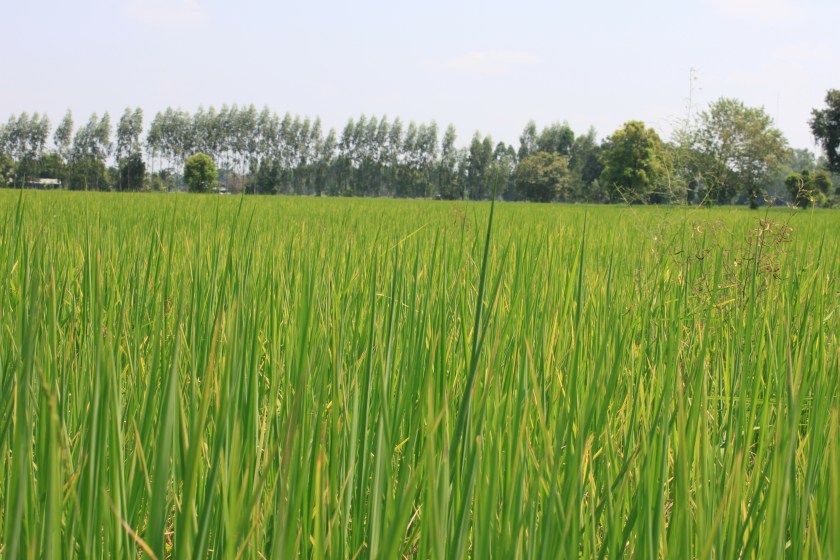
To say it’s an ‘earner’ is a bit of a misnomer as nobody seems to make any money from producing this crop. The wholesale price is fixed by the government and is currently under £0.18 per kilo. When ex Prime Minister Thaksin was the head honcho, the price was app £0.36 per kilo. Little wonder he has a very strong following in this part of Thailand! And to make matters worse, as there is, currently, an over supply of rice, the government has just restricted rice growing to only one crop a year irrespective of whether the more fertile areas are capable of producing 2 or even 3 crops!
Apparently the soil here is unsuitable for growing any alternative crops and as there are few economically viable alternative industries around, the local smallholder farmers eke out a living as best they can
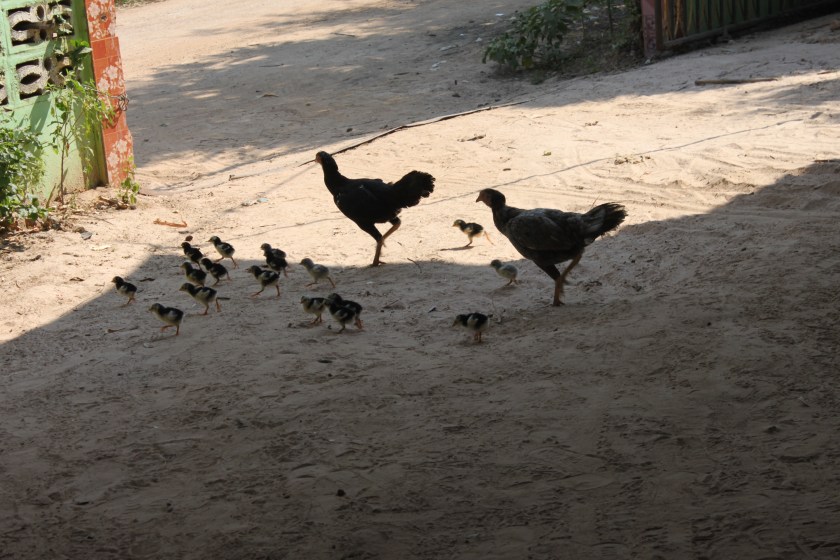
in the knowledge that generation after generation of farming has created little or no asset value for them and certainly insufficient income to provide anything other than the most basic standard of living for their families. It’s the strength of ‘family’, though, that holds this fragile society together.
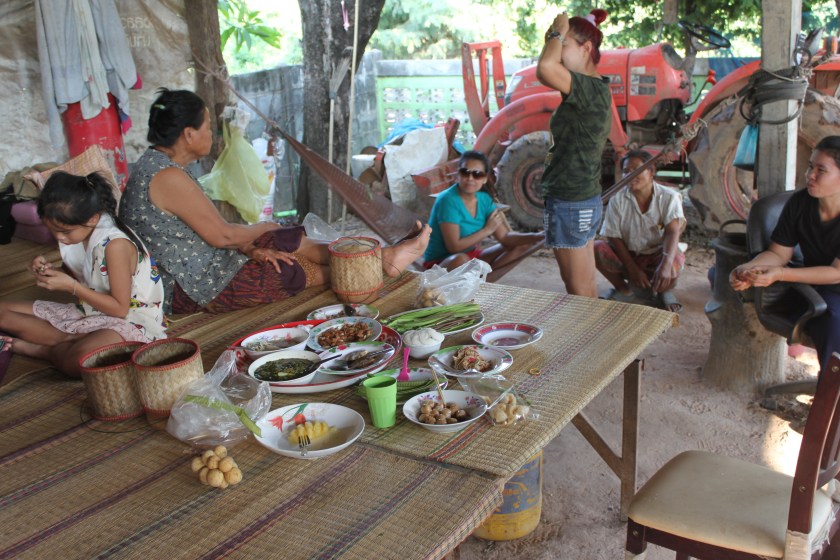
As I have mentioned previously, the Isan province is home to more than 30% of Thailand’s entire population but receives less than 10% of all government revenues, the major share of which goes to Bangkok and the tourist dominated areas in the south. Thailand’s overall growth rate is app 4% per year but, as so often happens this is unevenly spread,the more deprived areas having a lot of catching up to do.
The price paid for a more vibrant economy in the south – and especially in Bangkok – is, amongst other things, traffic congestion and the inevitable pollution this causes.
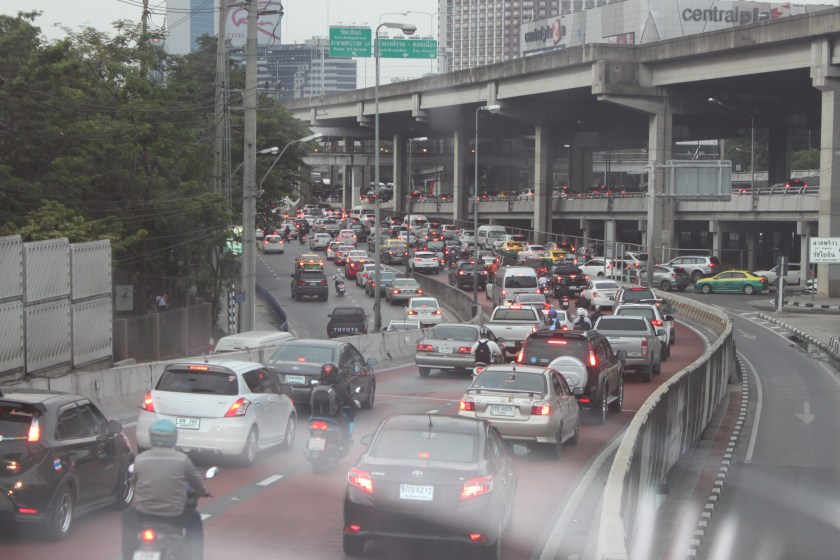
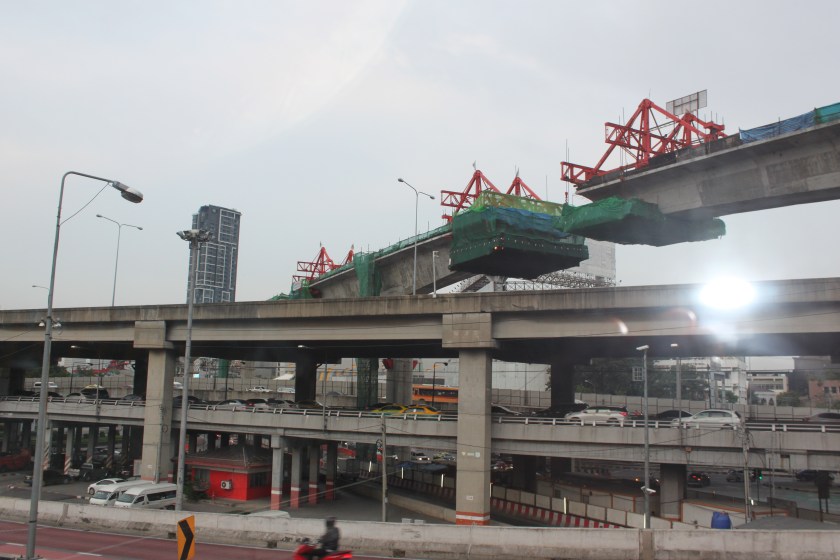
The Thais, though, seem to have settled on a simple solution – build higher!
My personal solution, though, is to move out of Bangkok – much as I love the place – and head south to Hua Hin.
Until I get there,
Phileas
 thelasthurrahsite