No, it’s not some sort of funfair game. It’s a method of fishing that has been practiced in Sri Lanka since Word War II when food shortages and thus overcrowded fishing spots prompted the fishermen to try alternative methods to make a living.
Whilst I watched this old guy for a while, he caught two fish which were too small to keep. The ‘sticks’ (posts) are actually embedded quite close to the beach so I was surprised to be told that large fish are often caught. These are then either sold on the roadside
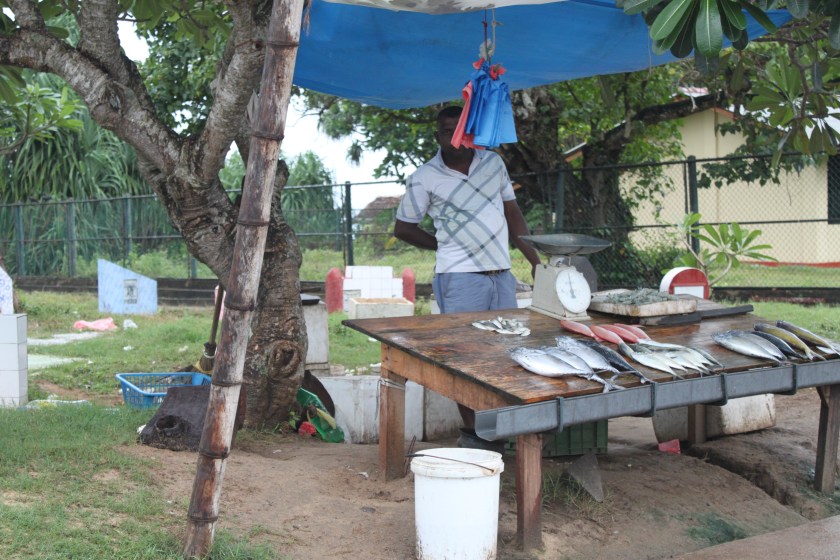 or sent to one of the many fish markets in the neighbourhood.
As the weather was still very substandard, lounging on the beach was again out of the question so it was another day of nature activity – on a sea water lagoon this time as opposed to the freshwater lake and river I explored in Bentota. For relatively little money , I hired a boat with captain and one crew
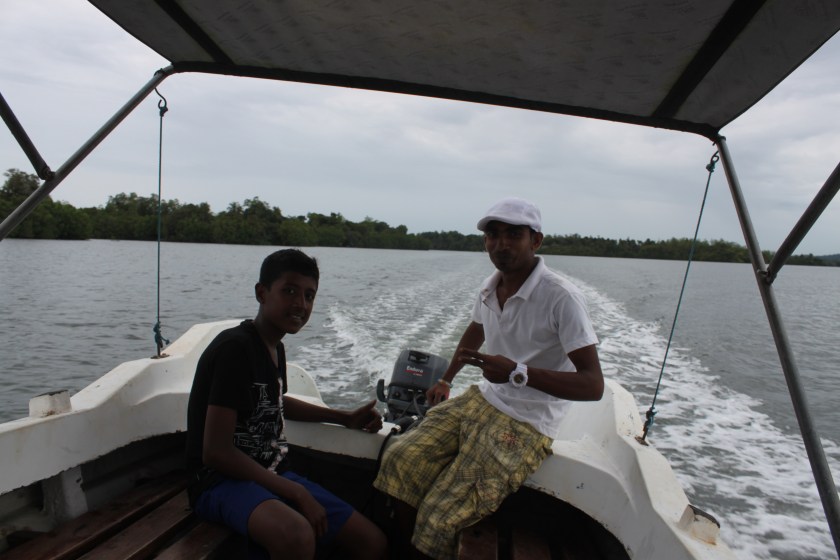
and off we set immediately passing a rather large crocodile who unfortunately disappeared under the water before I could snap him – so to speak.
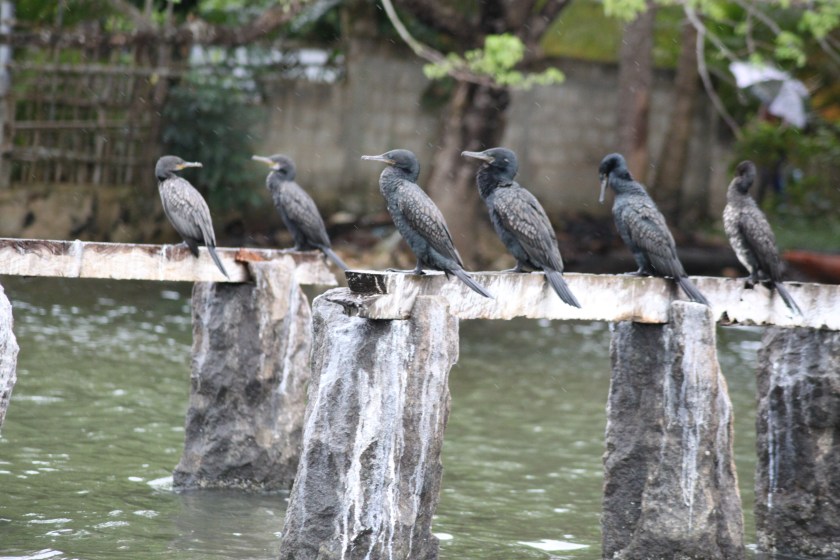
Apparently this lagoon and it’s 4 or 5 small islands used to be a wildlife haven. But the noise of planes landing and taking off from a small airport nearby plus the buzzing of the outboard motors of tourist boats has, sadly, reduced the numbers. However, we did see lots and lots of cormorants
 a white crane
 who didn’t stay still long enough for me to take a decent photo, a few black monkeys
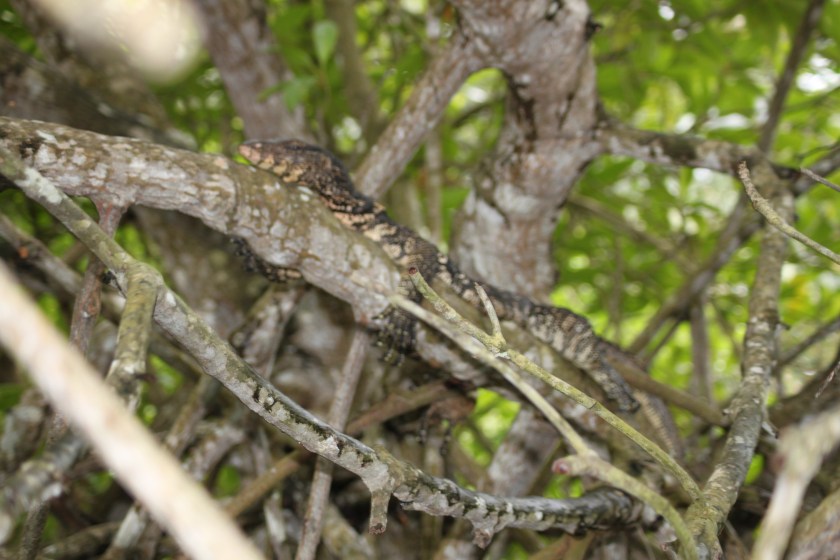
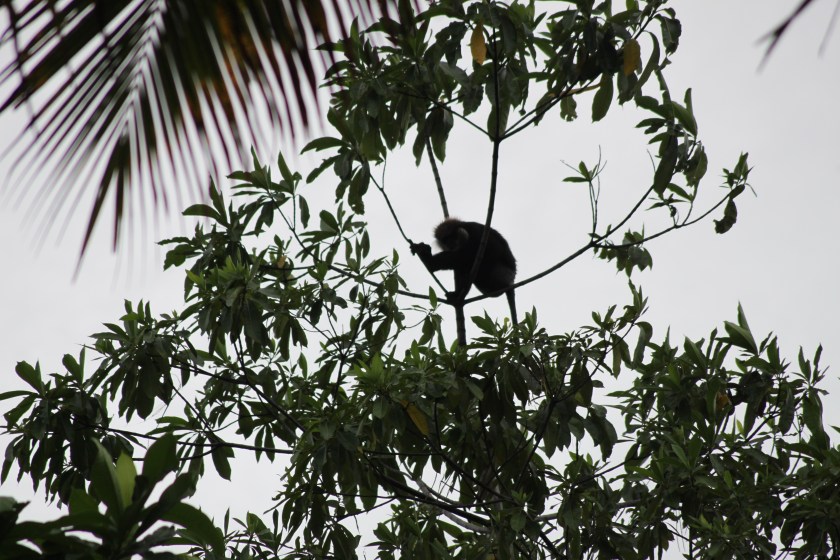 and a number of very sleepy tree lizards.
On one of the biggest islands in the lagoon is a Buddhist monks’ retreat. 26 monks live here, many of whom are young boys, following a life of prayer, meditation and learning. Large tourist groups are not encouraged but I was told that a single traveller such as myself could take a look. So we stopped and after a trudge through the very wet jungle
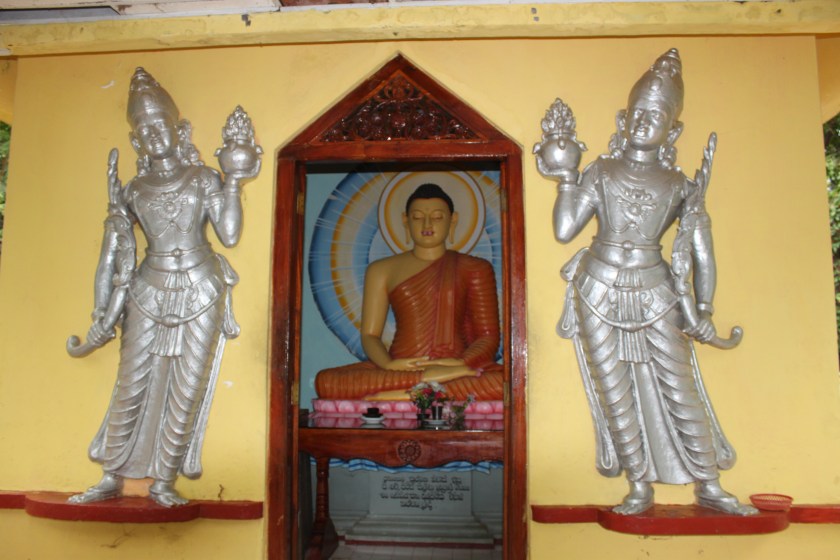
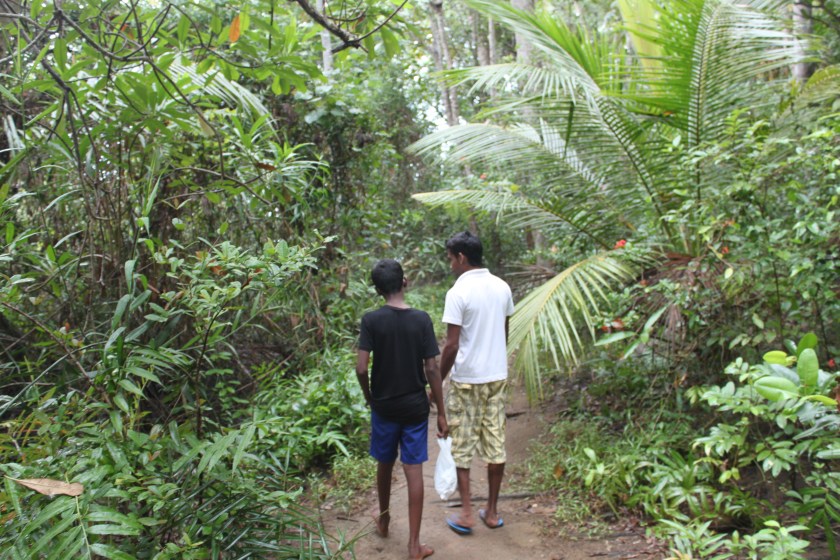 we came to the centre of this retreat – a small temple.
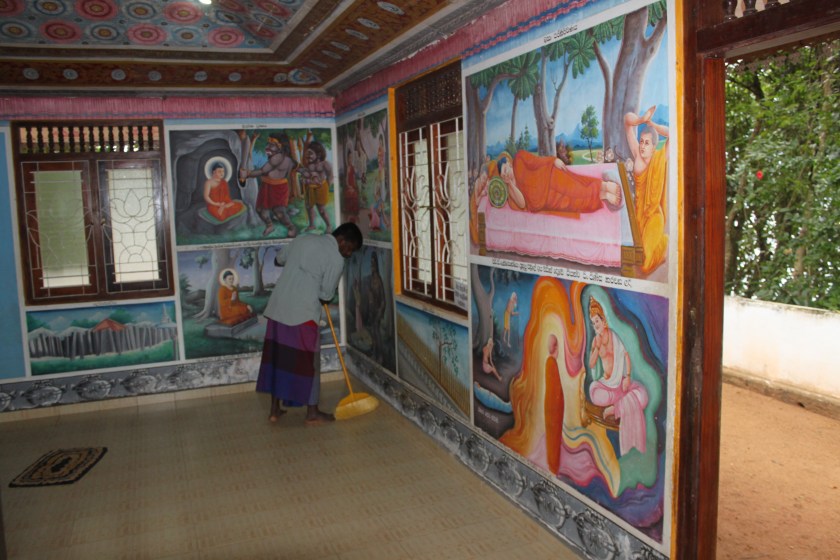
The inside walls were completely covered with paintings all of which, I assumed, told a story.
I say ‘assumed’ as my boat captain’s strongly accented English was, frankly, almost impossible to understand. So I just nodded vigorously from time to time which seemed to keep him happy.
All the while we were in this place one of the younger monks (a 10 year old boy) just tagged along without uttering a word., neither did he smile.
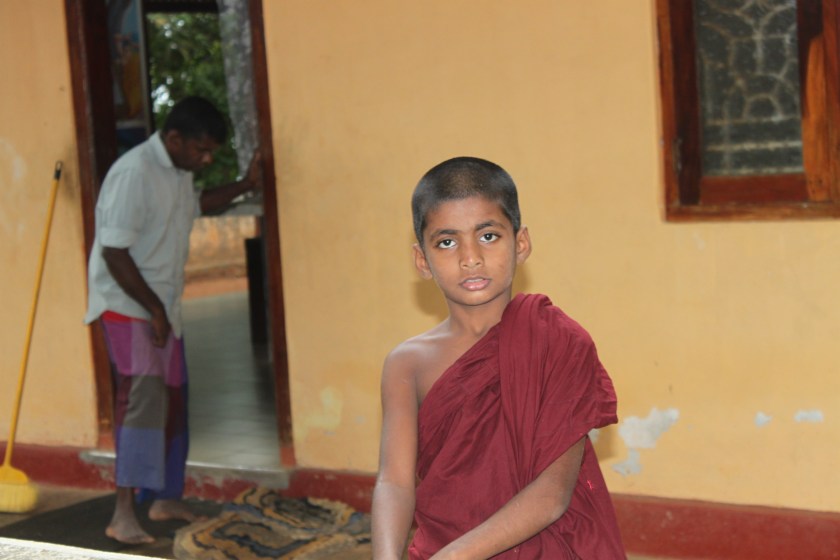 Unfortunately I was unable to find out if he was unhappy to be living in virtual isolation or he just had a sad face! He certainly looked quite sad as we boarded our little boat and headed back to the mainland again.
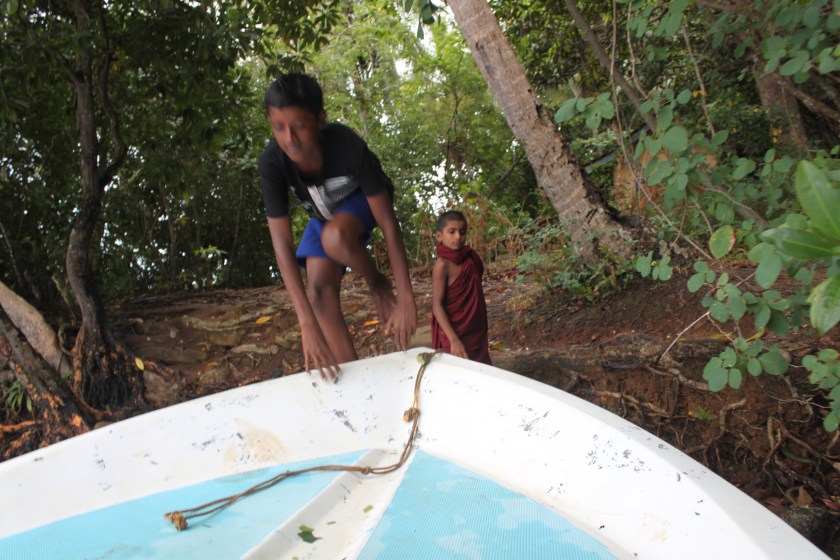
I have been reading a bit about Buddhism since I entered Buddhist territory but I haven’t yet got to the part which answers the questions: what drives these youngsters to give up what we would call a ‘normal’ life and choose one of meditation, prayer and virtual isolation? Do they have a choice? And are they better ‘contributors’ to the world by doing so? Have they got it right or have we? The answer is probably. as always, somewhere in the middle.
By the time we set off back to base again, the rain had stopped (finally?) so the livestock were on the move again.
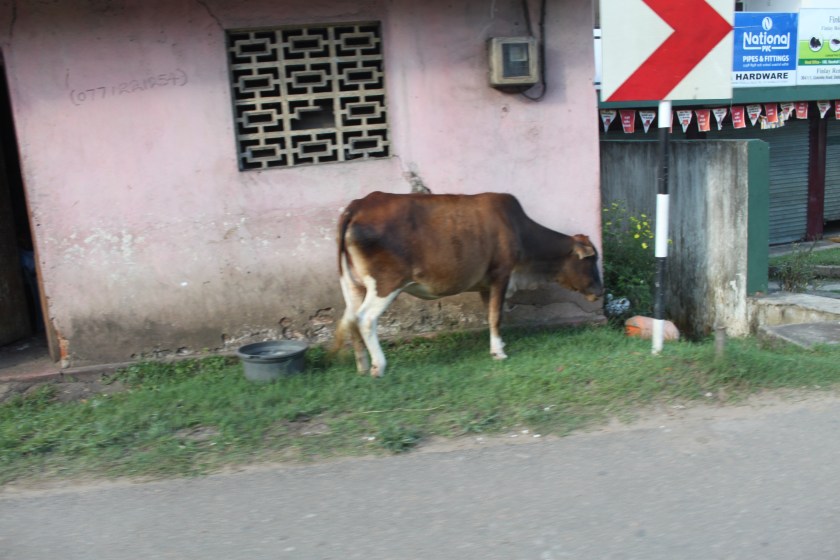 Here’s hoping for a few rays of sunshine tomorrow.
Phileas
 thelasthurrahsite