A bright, sunny day greeted me this morning so I took full advantage by having an early breakfast

with a very special view. Where I am staying is more restaurant than hotel as there are only 4 bedrooms. Very boutique! Actually, I much prefer the smaller and more intimate hotels and Unatawana has loads of them
 which gives the place a rather nice ‘village’ feel. Clearly, tourism has been established for a lot longer here than in my previous destination which is no bad thing as the service levels are considerably higher than in Bentota. The beach, though, is not as wide and a bit more crowded, especially with dive boats. It’s a big sport here (N.B. Ollie).
 At the other end, up the hill, there is yet another (small) temple
 which, of course, I had to visit
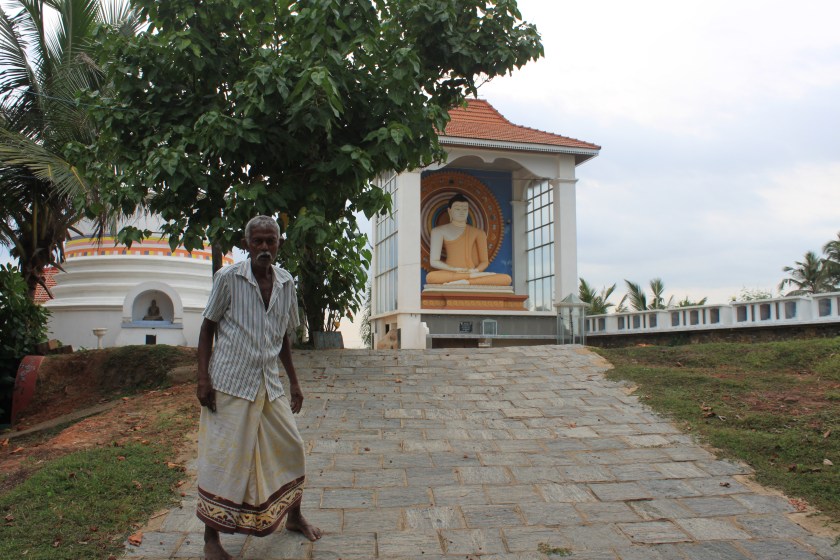 with the help of the outstretched handed guide, of course. Actually, it’s nothing special but does command a good view of Unawatuna bay.

After this morning’s roasting, a bit of afternoon exploration was necessary so it was off to a silk factory. Actually it was more like a suburban house than factory but I guess you don’t need much space when you’re dealing with very small insects!
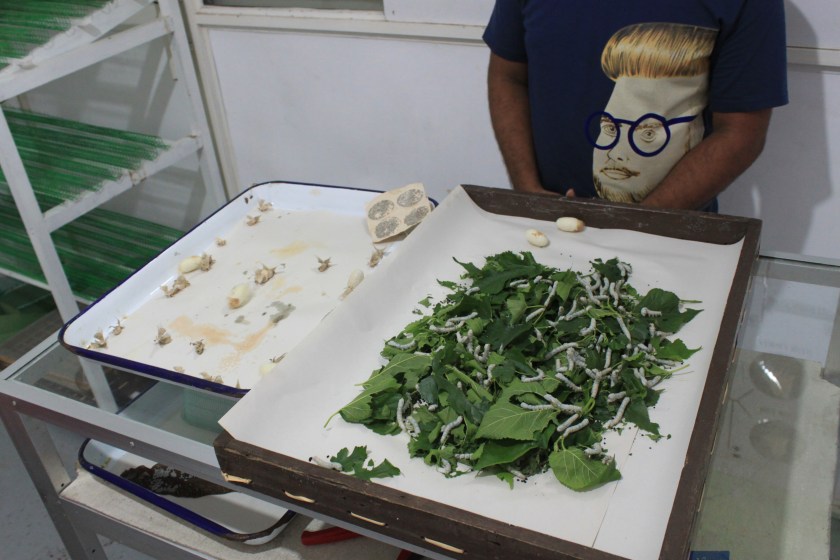 Silk moths (on the left) typically lay around 500 eggs each which then hatch into caterpillars that grow by feasting on mulberry leaves (right). When they are done munching they build a cocoon around themselves
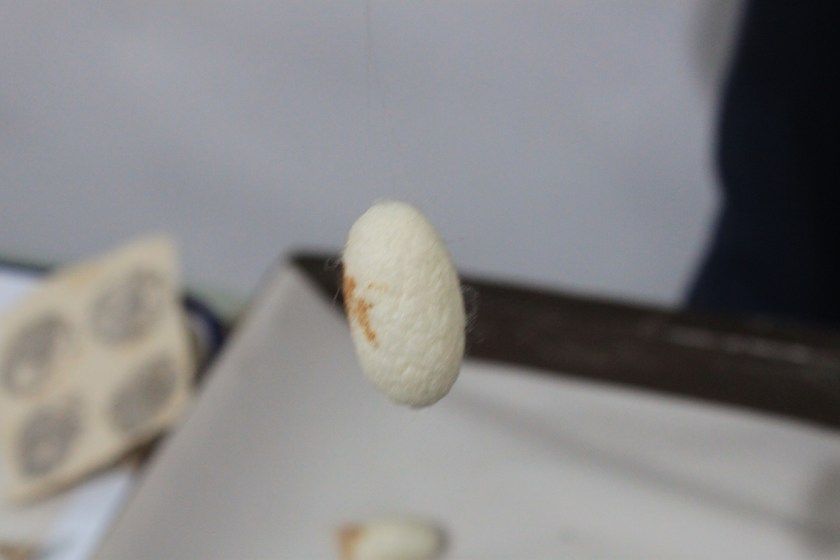
from which, after a while, out pops another moth and so it begins again. Actually, this is not always strictly true because the silk strands cannot be extracted from the cocoon whilst the moth is still inside and if the moth escapes naturally then the silk can be destroyed. So, 50% of the cocoons are allowed to develop naturally thus maintaining the moth population whilst the other 50% are drowned(!) and then the silk extracted. An amazing 1 km stand of silk can come out of a single cocoon which is then combined with others (depending on the silk thickness required) and spun into pure silk thread.
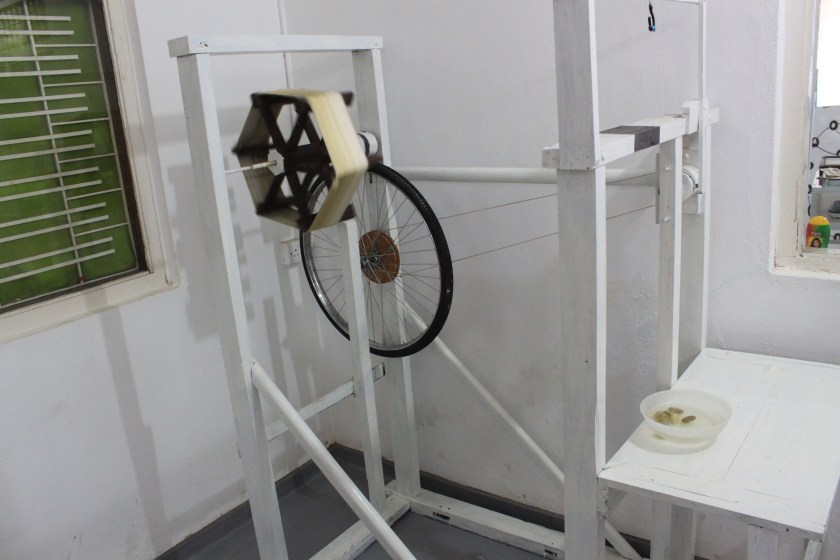
In this picture you can see the half dozen cocoons in the bowl of water on the right. What you can’t see are the stands of silk leading onto the spool on the left but, believe me, they are there.
Once the silk has been spun it goes off to the dyers to be coloured and then returned to the factory to be woven
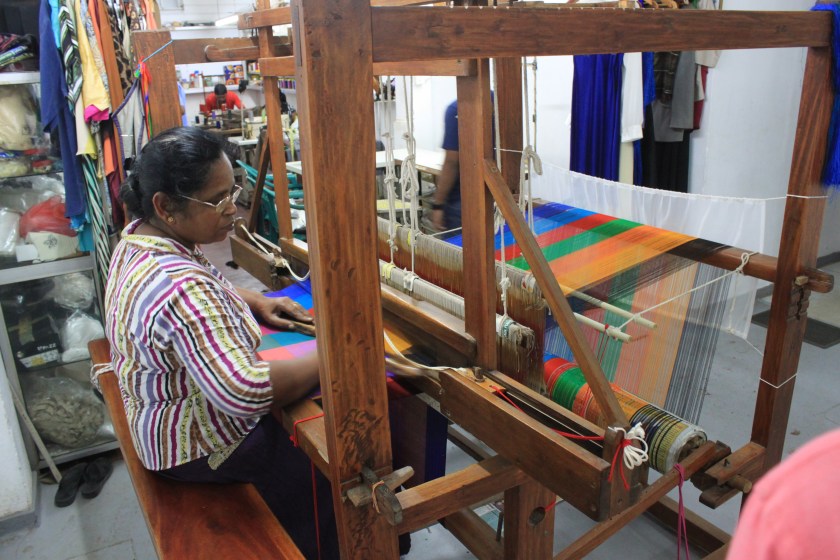
and then sewn into a multitude of garments displayed in the showroom.
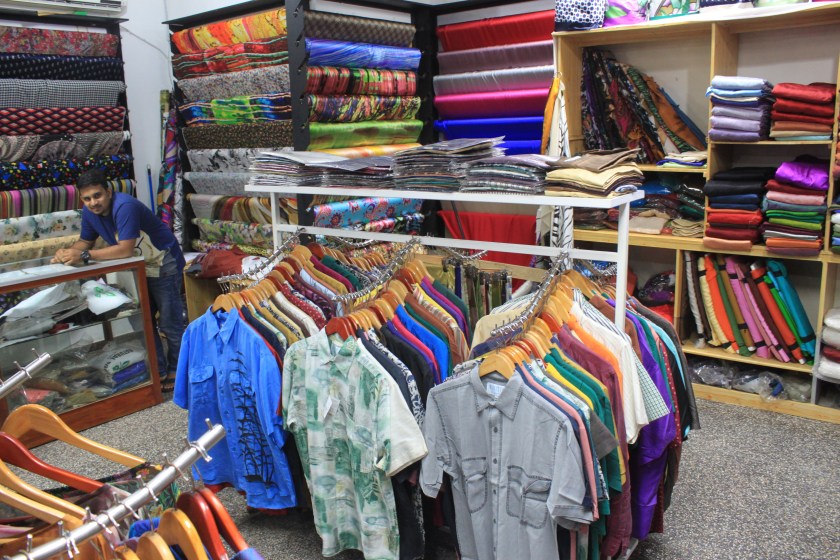 So, a lazy morning and an educational afternoon. Perfect.
Phileas

