Late yesterday afternoon, a Russian swimmer got into trouble and had to be rescued by one of the staff from my hotel. Mr Rusky was dragged ashore where he sat for a few minutes recovering from his ordeal. He then got up, mumbled a ‘thank you’ to the man who had saved his life and walked off to where he was staying. Considering the average (the average) monthly salary in this country is around £160, you would have thought that a more generous reward might have been in order.
The effects of the tsunami (2004?) which killed thousands are still talked about, not only the disaster itself but the after effects. It seems that too many Sri Lankans profited personally by diverting relief funds into their own pockets. I have been shown 2 hotels that were ‘built on tsunami money’. We know that corruption is endemic in poor countries but what is so sad is that most of the people here know what’s going on but feel powerless to do anything about it. So the few rich get richer and the vast majority get poorer.The current government has 3 more years before the next election. I would not be wholly surprised that sometime between now and then I learn of a more sudden change.
Geoffrey Bowa, a well known Sri Lankan architect (who, strangely, started life as a lawyer) designed and built a house and gardens at Lunuganga which is open to the public. As an alternative to frying on the beach, I took a look and was, once again, struck by how much the Sri Lankans have to learn about exploiting the assets they have. There were no signs to the place. There was no mention of special opening times on the internet but on arrival, the main gate was shut with a small notice stating that we (the few others waiting) would not be allowed in until 1130.
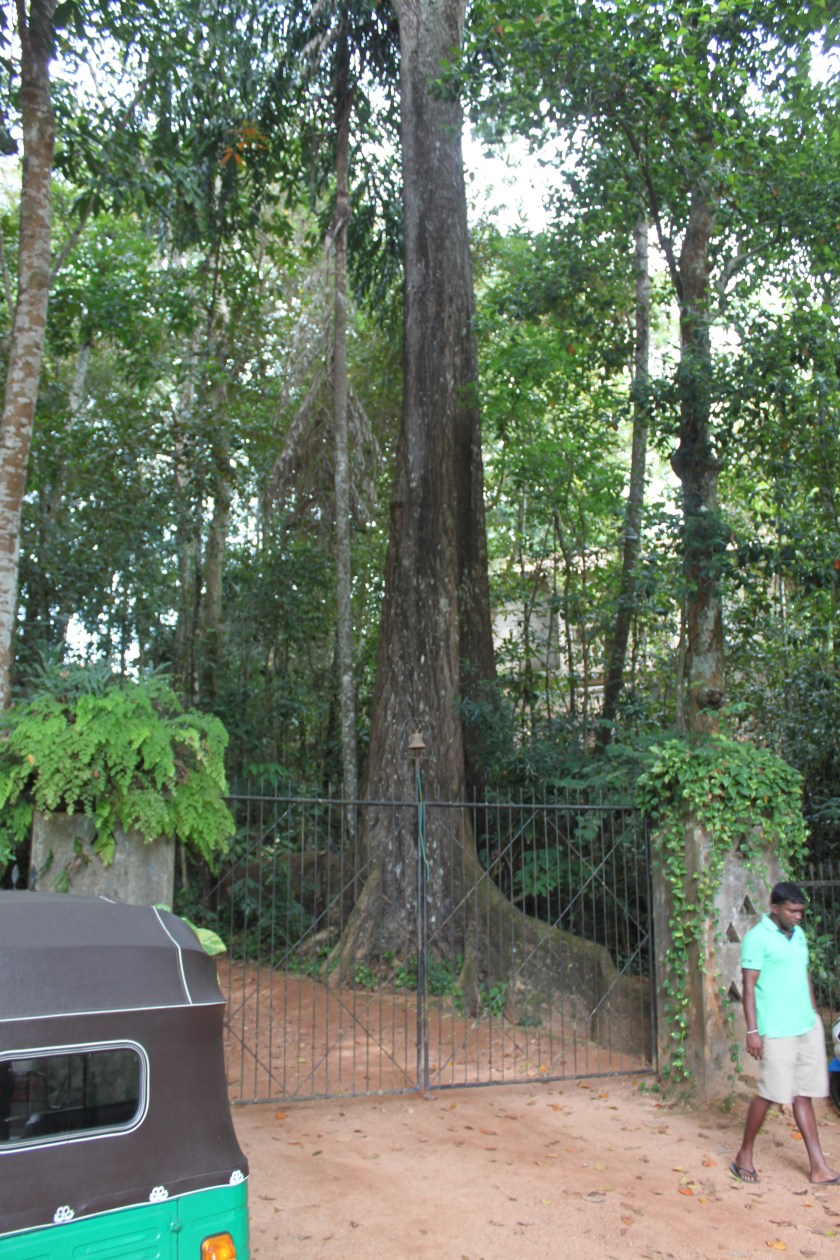
(N.B. Very large mahogany tree).
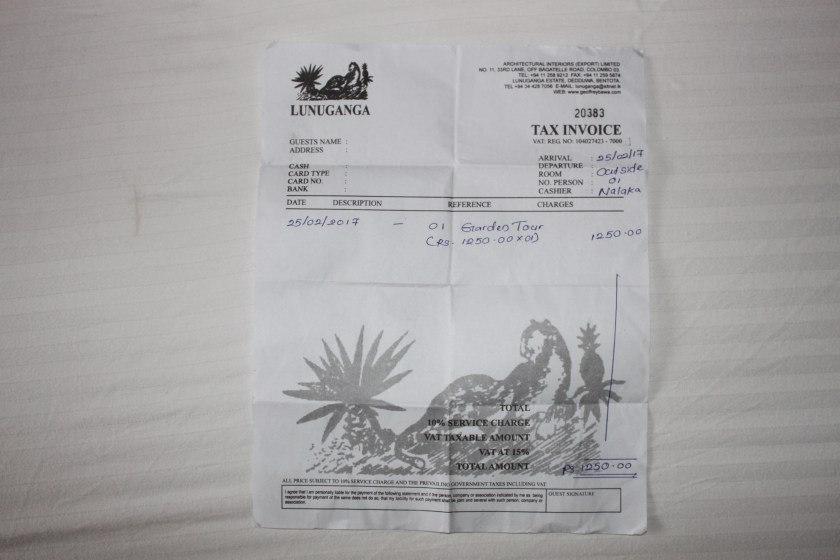
So we waited. By this time there were about 18 hot and humid folk who were eventually allowed in and ushered up the drive to the ticket desk where a little lady painstakingly hand wrote individual tax invoices for each of the assembled company!
When we finally moved off it became obvious that I had joined a load of either professional or amateur botanists. All I wanted to do was to have a gentle wander around the estate, take a few pics and leave. But our tour guide was having none of it. Every tree was stared at, every leaf was inspected. I do like gardens and gardening but this was a step too far!
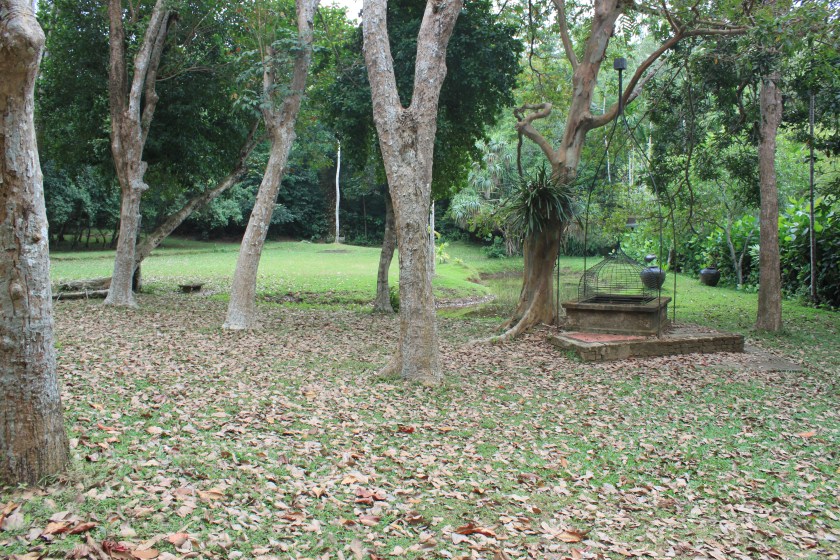
The construction of this estate was started in 1947, just before Sri Lankan independence, took 20 years to complete and must have been stunning in its heyday.
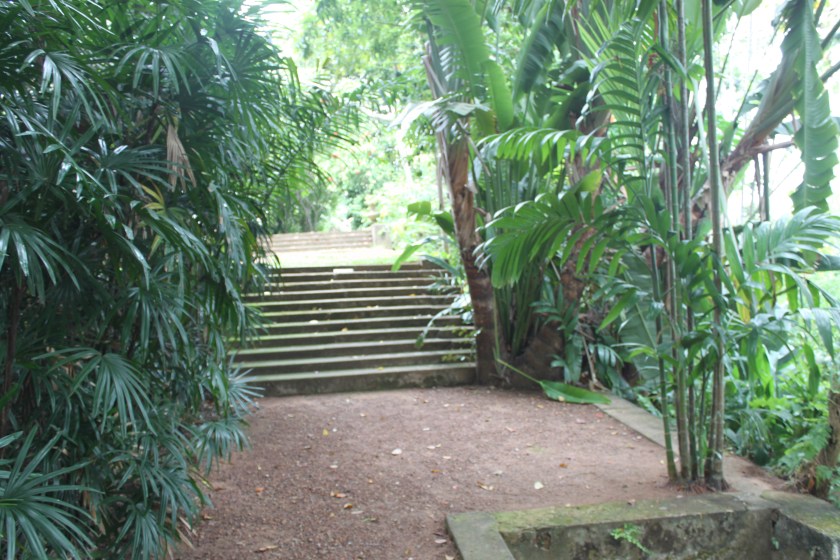
A staff of 42 (2 in the house and 40 in the garden!) were employed to ensure the place was always in perfect condition for Mr Bowa’s occasional visits. He only ever visited for 1 day a week, his working residence being in Colombo, although his bust is in residence 24/7.
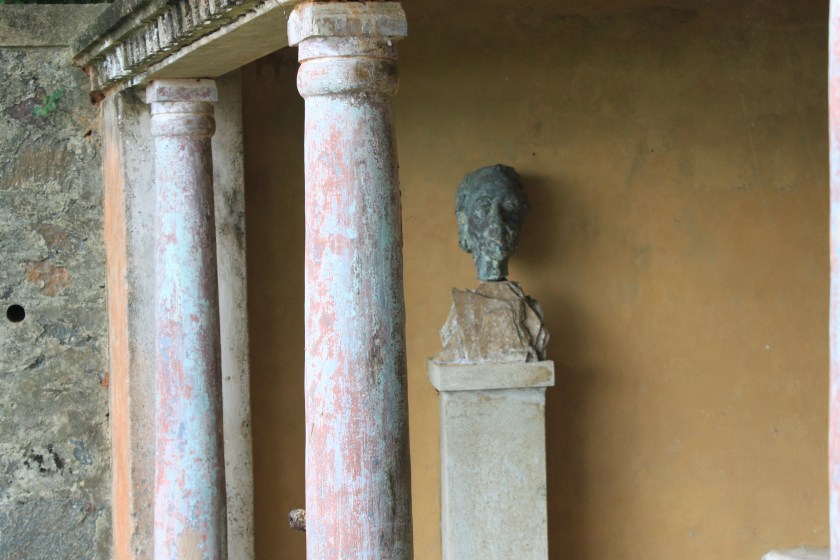
Now however, there is clearly not enough money being invested to arrest a gradual decline despite parts of the buildings being turned into a US$300 per night hotel
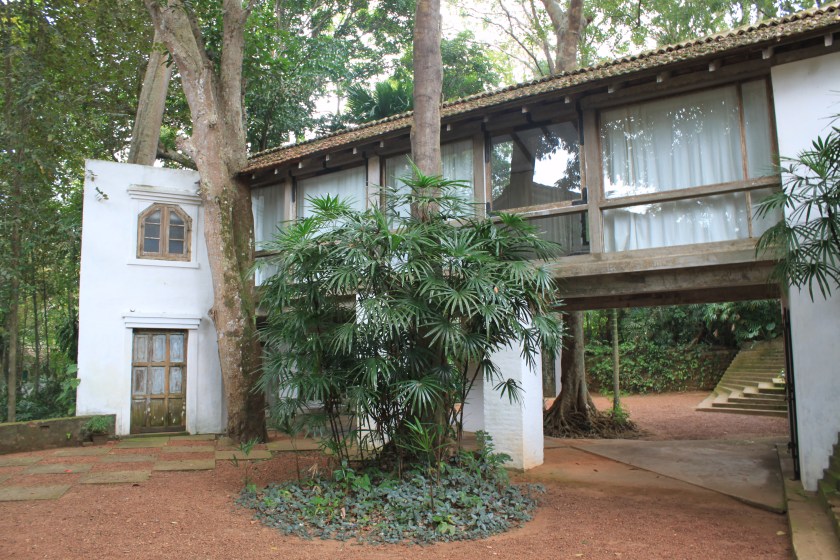
On a scale of 1 – 10 with Waddeson Manor, for example, being 10, I would say Lunuganga is a 3. I’m glad I went though as, frankly, there is little else here other than the glorious beaches. I can’t help feeling that a bit of help from a few key chaps from our National Trust would do wonders for this place.
The journey back to the hotel was slow,
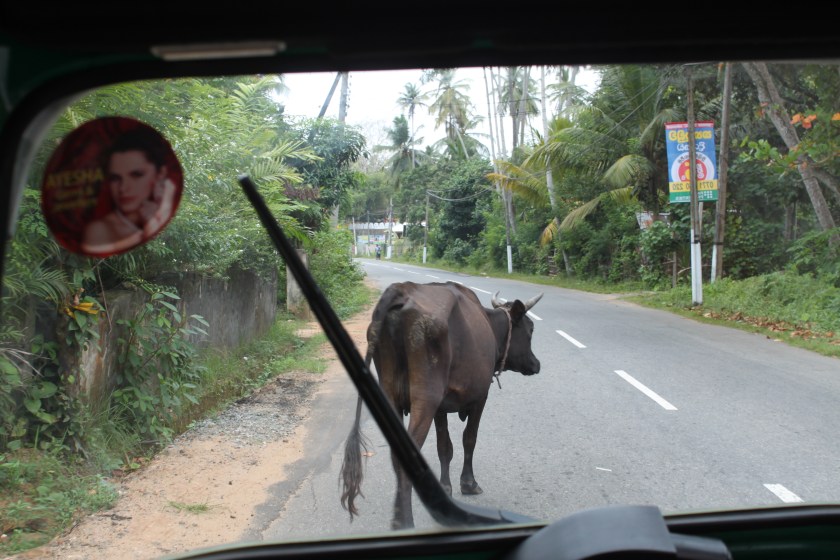
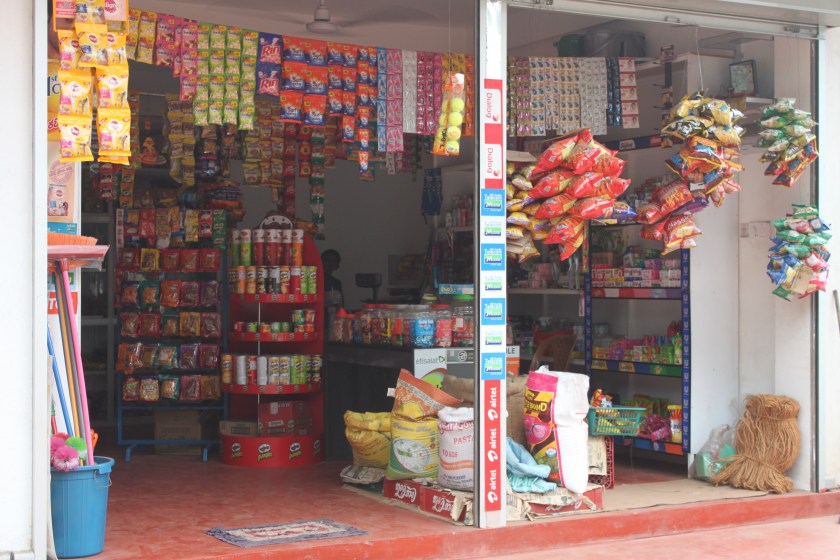
hot and humid. So liquid refreshments from the main supermarket were in order.
Buddhism is the major religion in Sri Lanka although the temples are nowhere near as ostentatious as in Thailand.
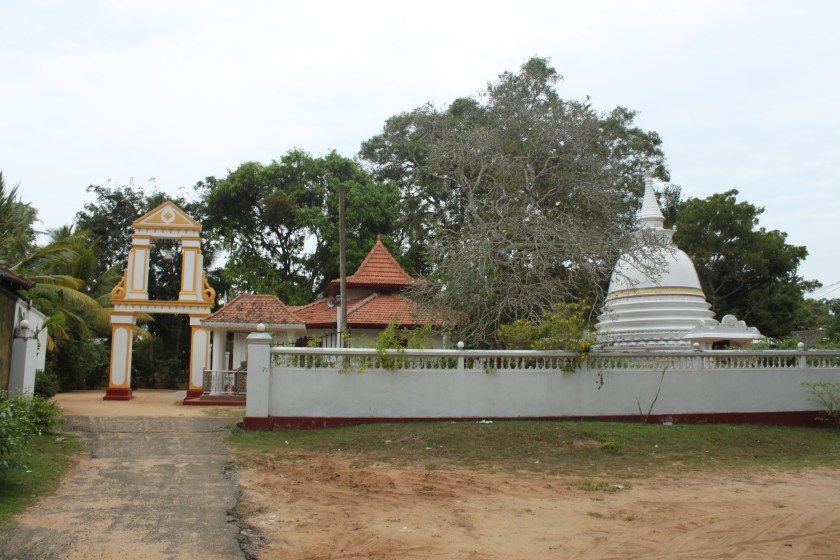
but dedication is just as strong. I asked this man if the flowers he was collecting were for decoration or even for eating.

He smiled at me and simply said: “for Buddha”.
I have spied another cheap looking restaurant close to my hotel with an interesting looking menu and, equally importantly, selling beer (not all places do). So I shall venture out later for a quiet dinner
 until the train rattles past!
Phileas
 Tuk tuk transport is pretty cheap here and in good supply,
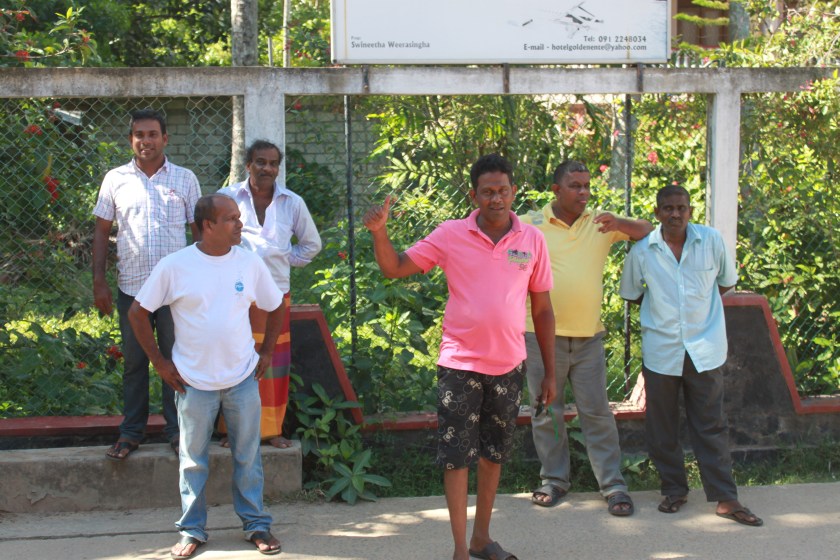 many drivers waiting patiently outside most of the hotels. Generally, these guys not only speak good English but also are well informed. So it’s really a cheap guided tour.
 and onwards past the lifeboats
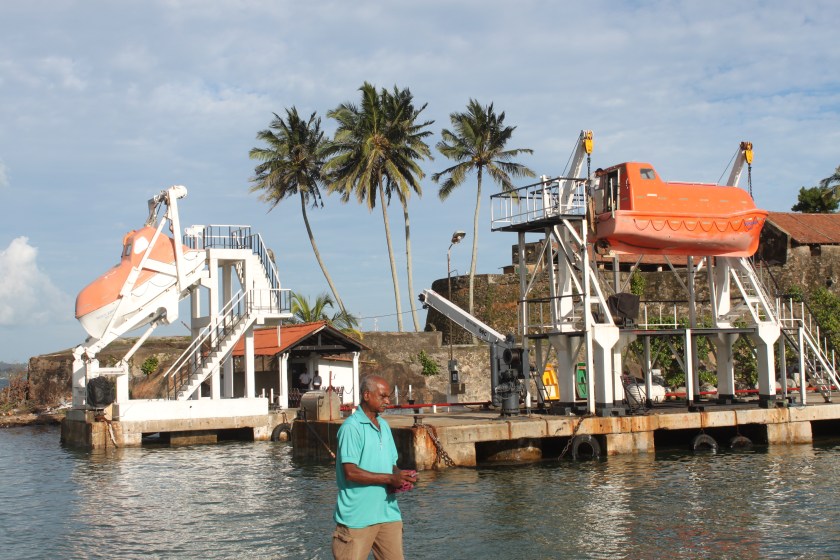 (or I assume they are although I wouldn’t like to be launched by the one on the left), you come to the inner wall
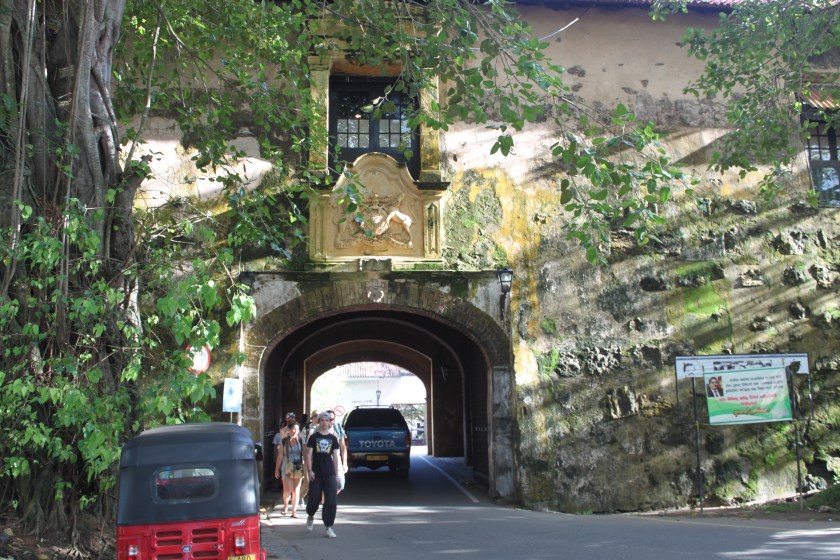 where a tunnel underneath the law courts brings you out into the original part of the fort.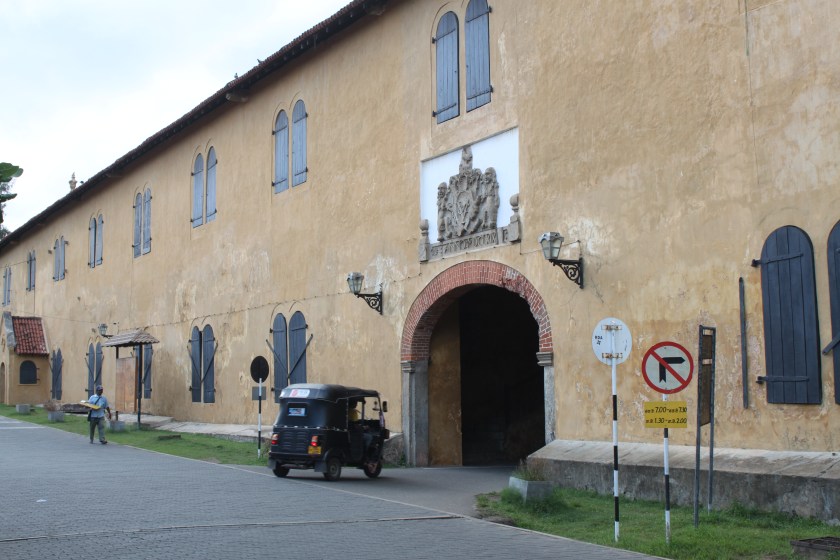
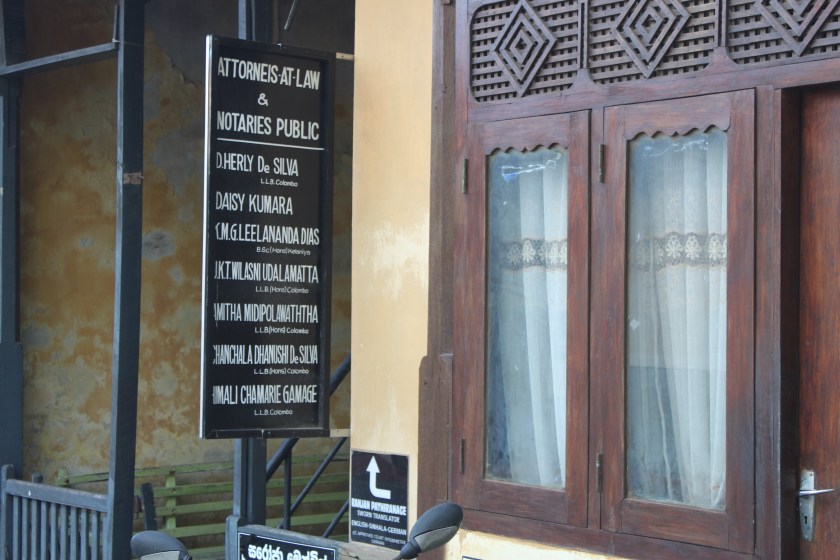 Mr da Silva is hardly a Sri Lankan name!
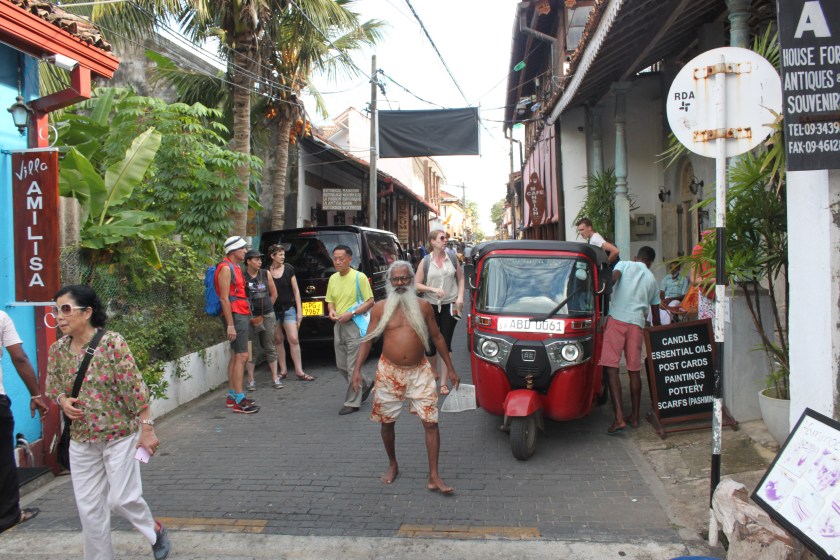 full of art, antique, jewellery shops, restaurants and a few small boutique hotels.
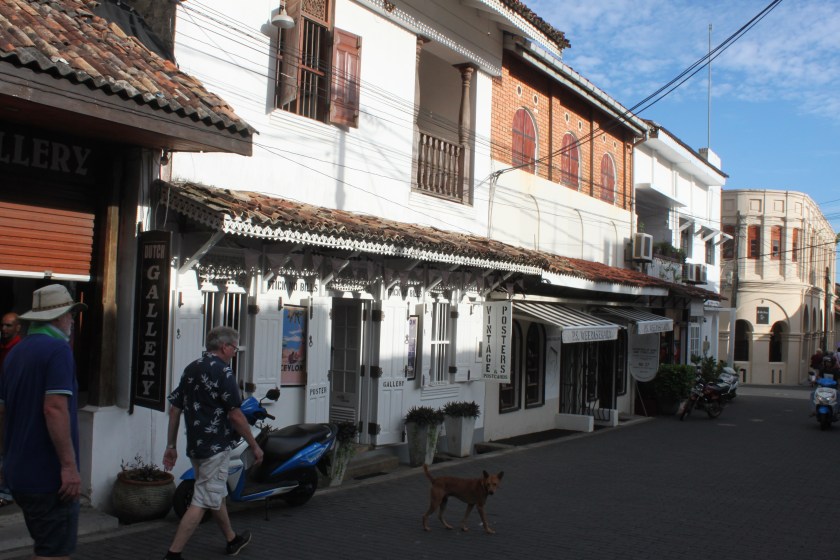 All quite bohemian and all quite chic.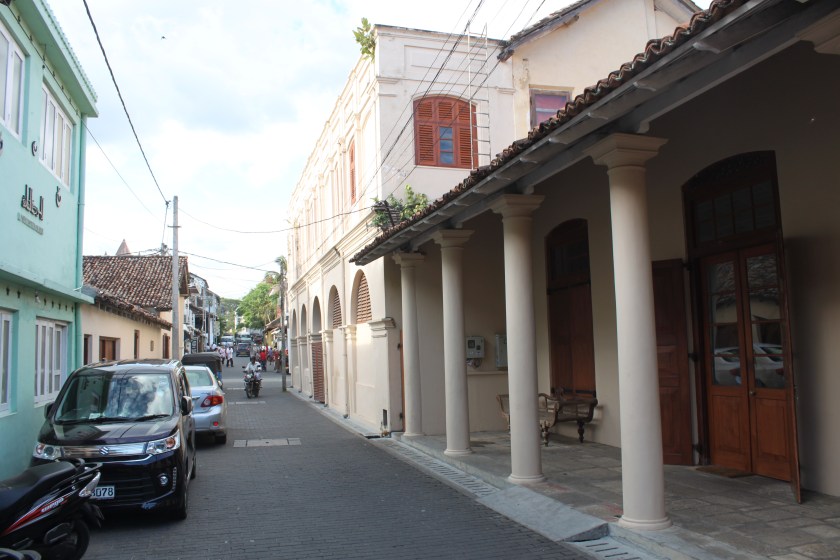
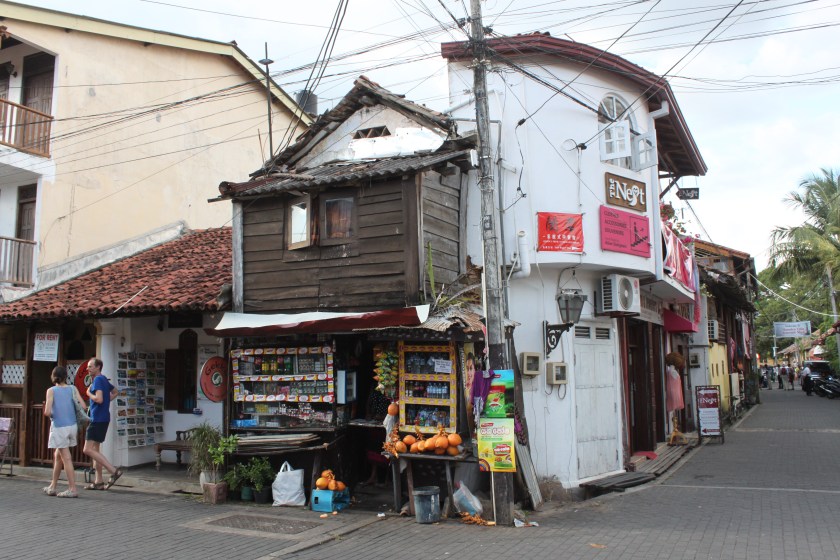
 As a result, I spent far longer here than I or my driver had intended, so it was time to go. I think I’ll have to come back tomorrow to check out the rest.
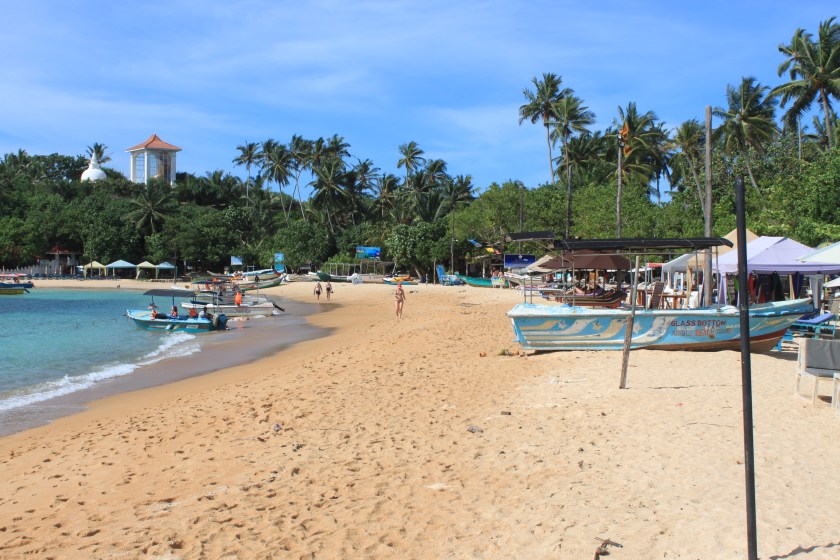
 which gives the place a rather nice ‘village’ feel. Clearly, tourism has been established for a lot longer here than in my previous destination which is no bad thing as the service levels are considerably higher than in Bentota. The beach, though, is not as wide and a bit more crowded, especially with dive boats. It’s a big sport here (N.B. Ollie).
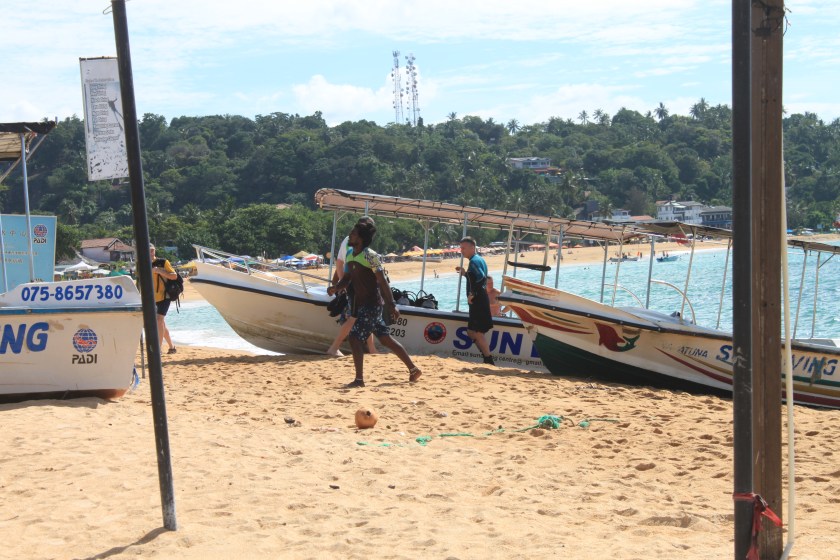 At the other end, up the hill, there is yet another (small) temple
 which, of course, I had to visit
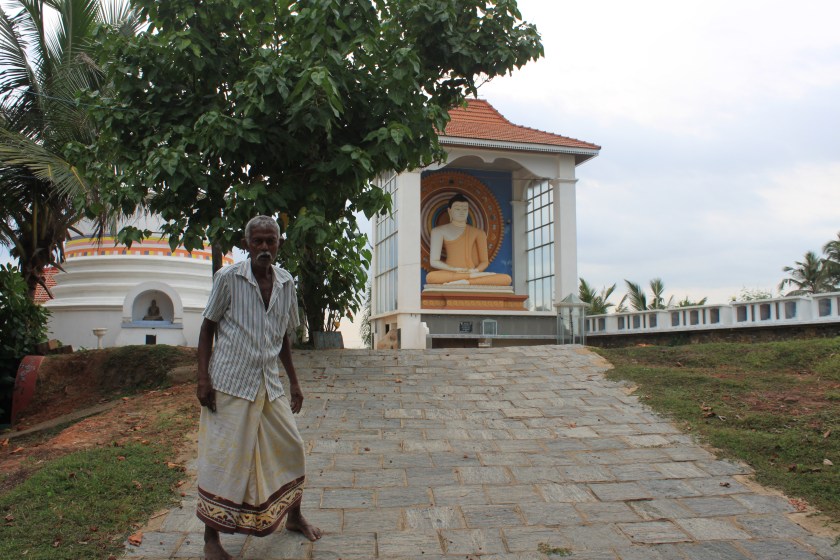 with the help of the outstretched handed guide, of course. Actually, it’s nothing special but does command a good view of Unawatuna bay.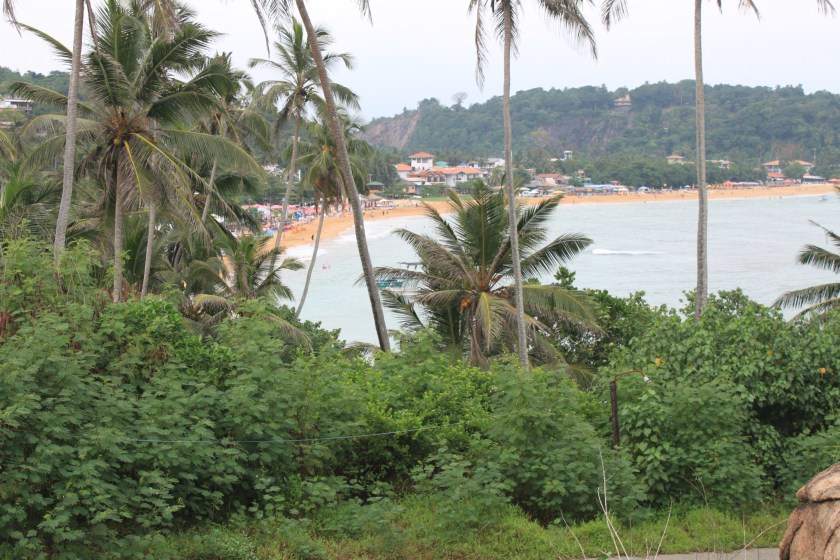
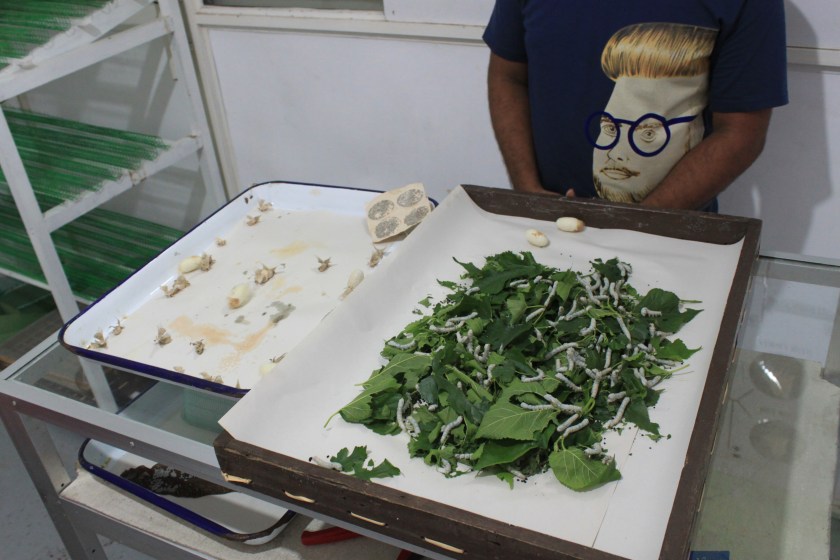 Silk moths (on the left) typically lay around 500 eggs each which then hatch into caterpillars that grow by feasting on mulberry leaves (right). When they are done munching they build a cocoon around themselves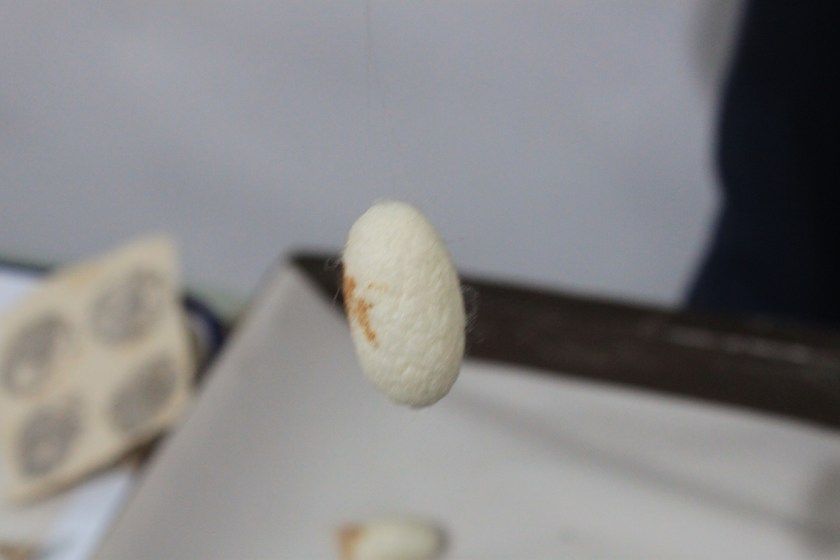
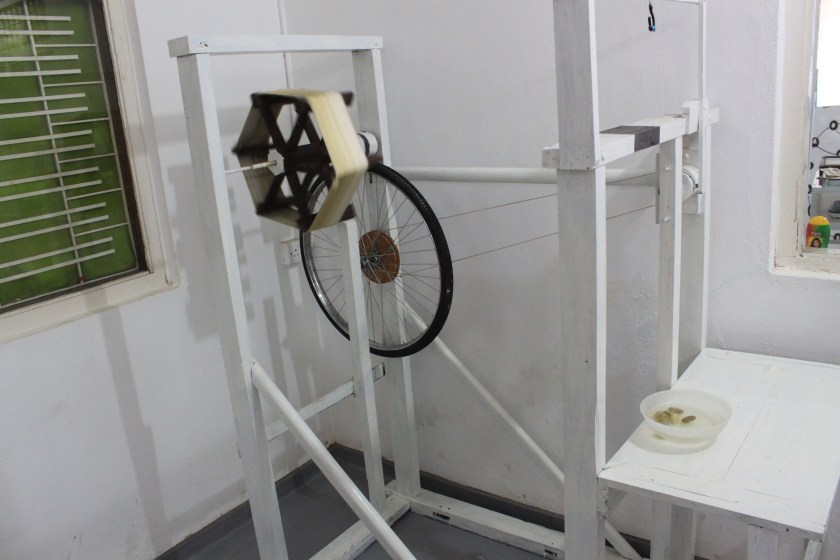
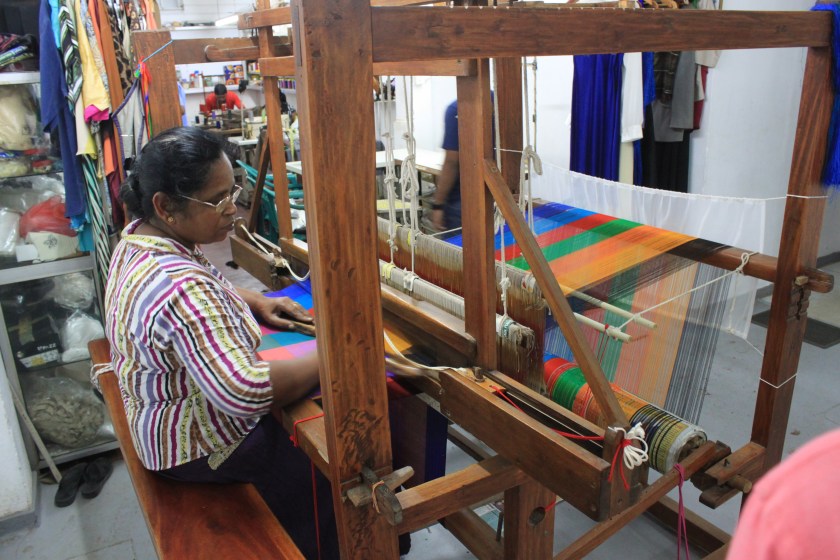
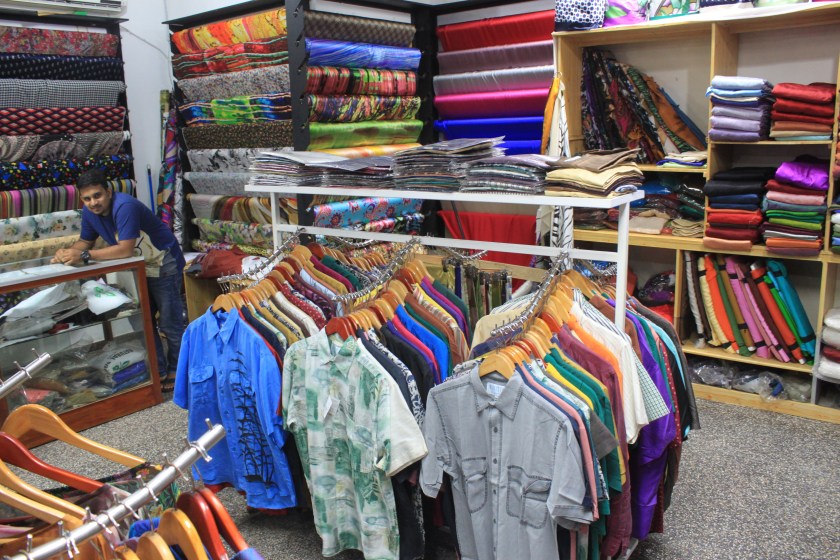 So, a lazy morning and an educational afternoon. Perfect.
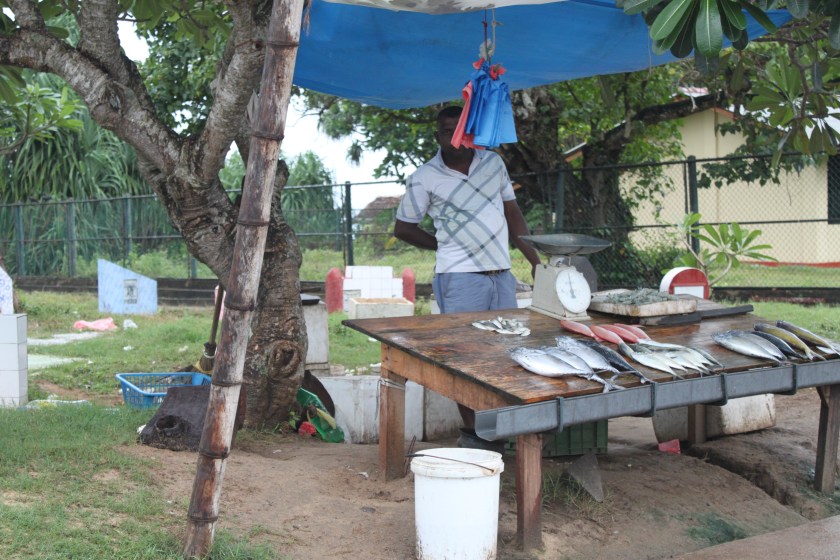 or sent to one of the many fish markets in the neighbourhood.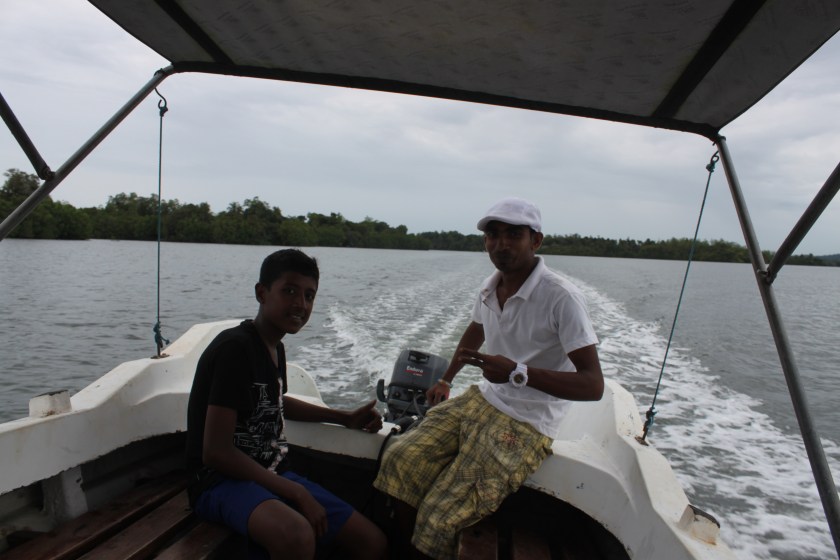
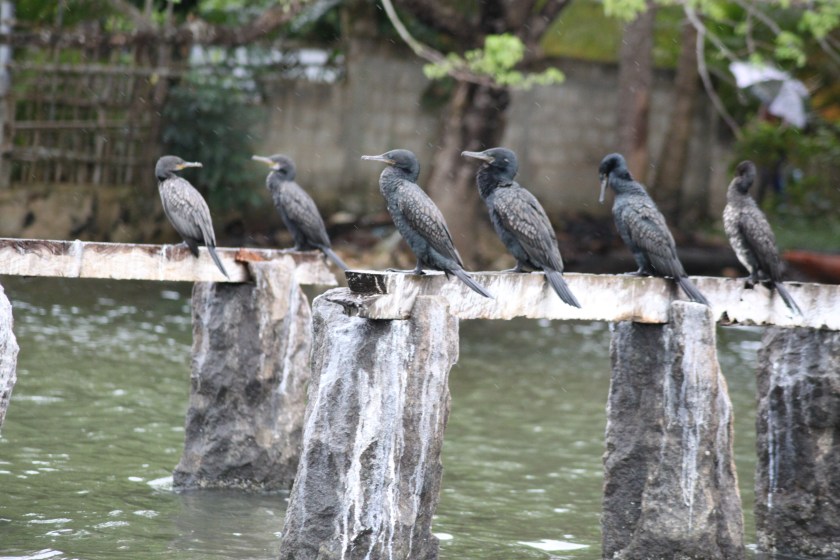 a white crane
 who didn’t stay still long enough for me to take a decent photo, a few black monkeys
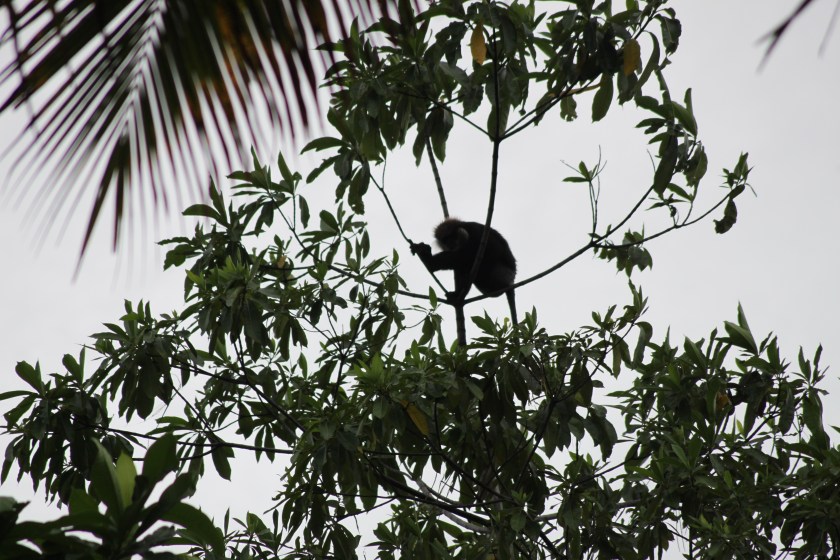 and a number of very sleepy tree lizards.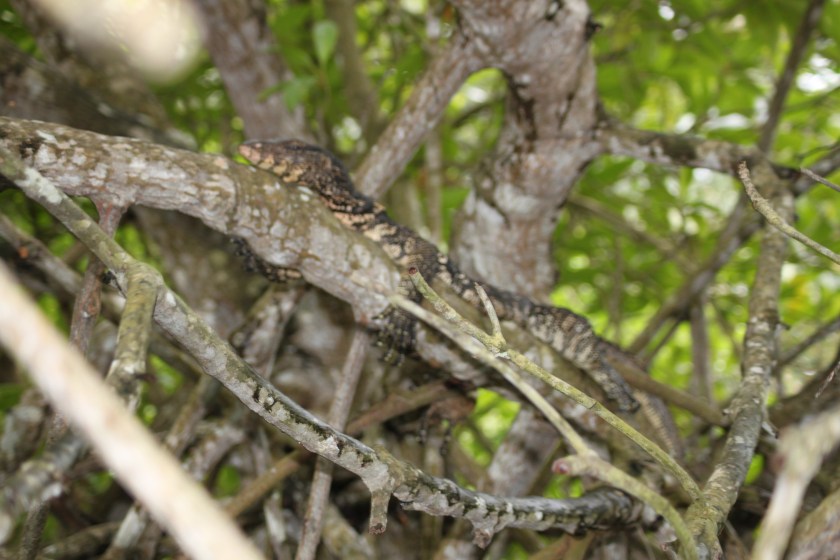
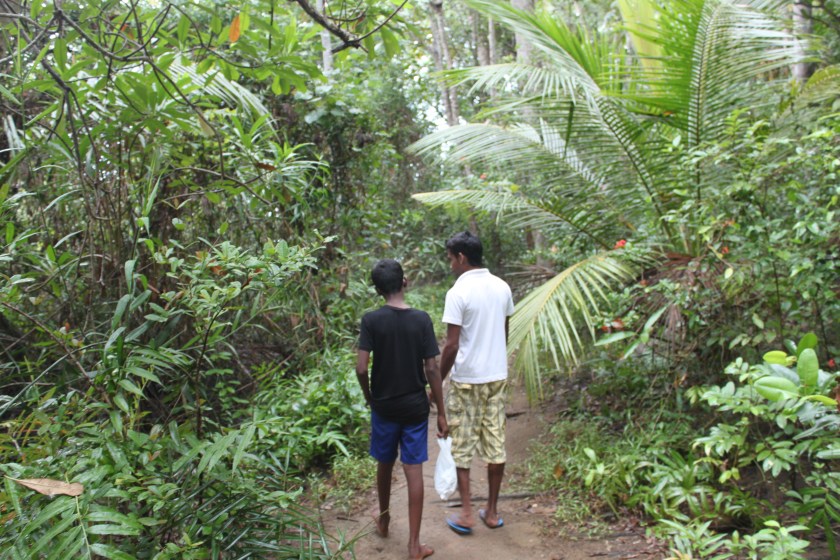 we came to the centre of this retreat – a small temple.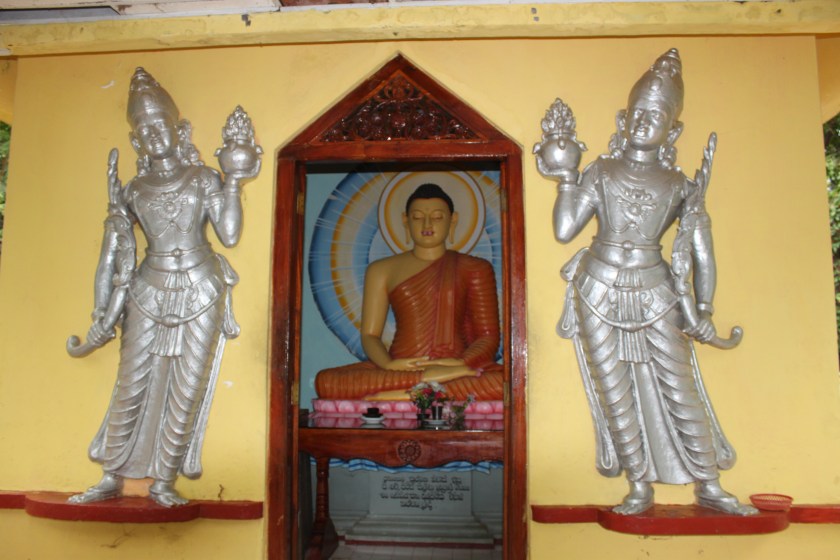
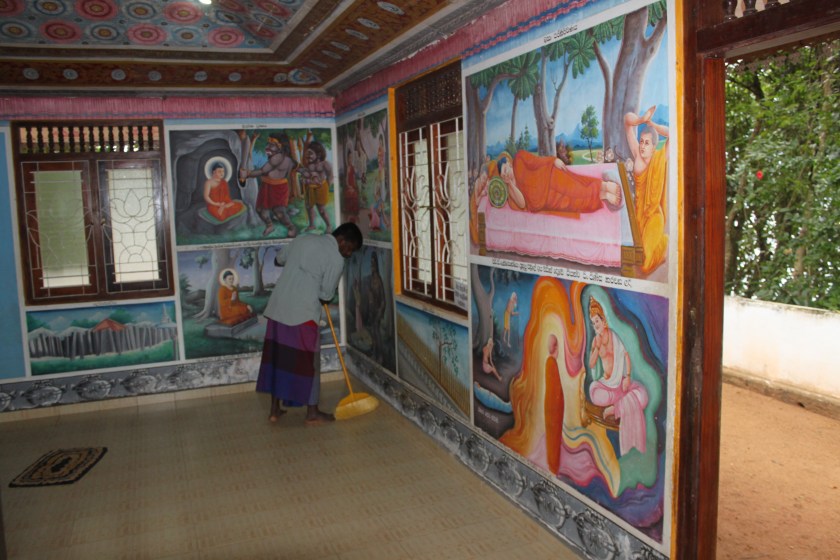
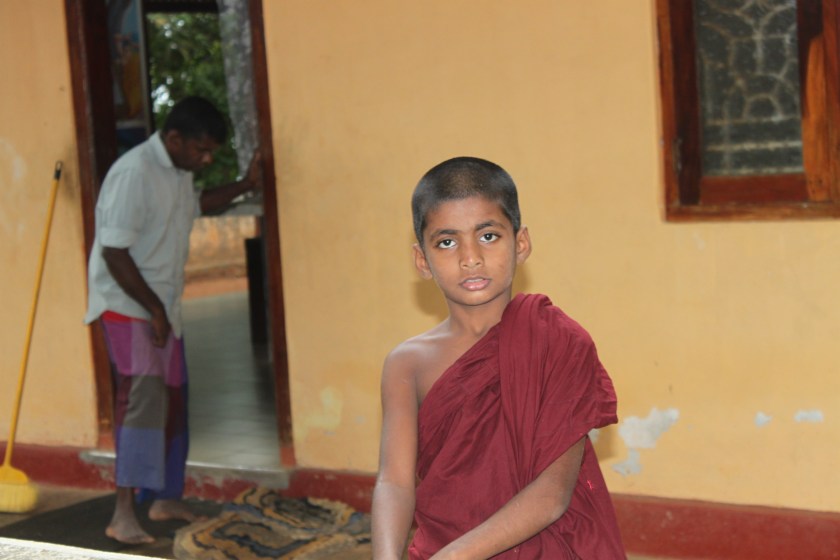 Unfortunately I was unable to find out if he was unhappy to be living in virtual isolation or he just had a sad face! He certainly looked quite sad as we boarded our little boat and headed back to the mainland again.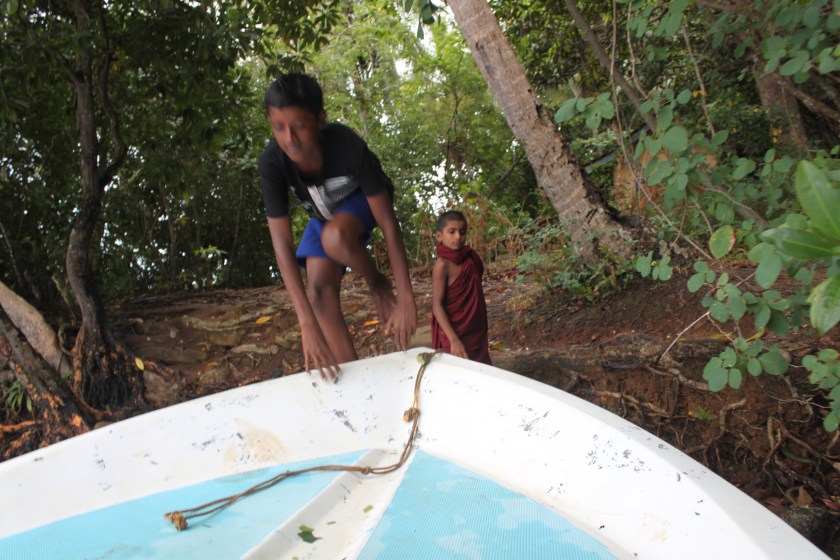
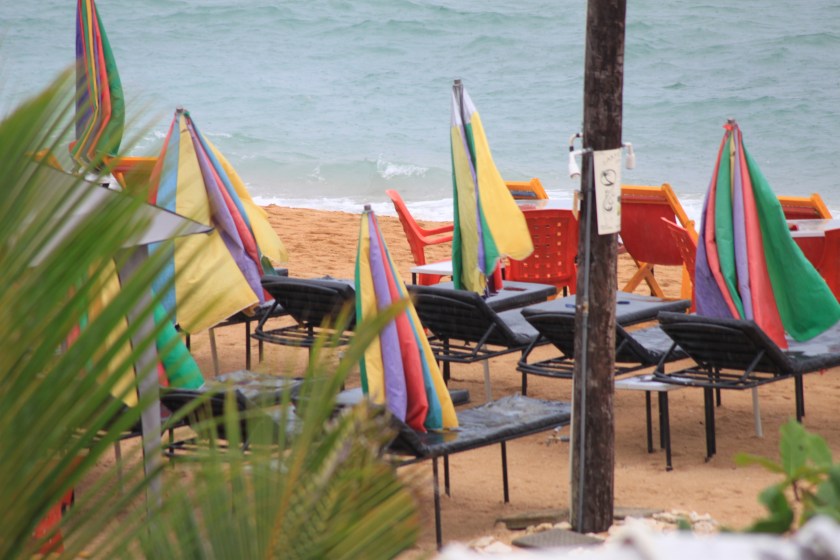
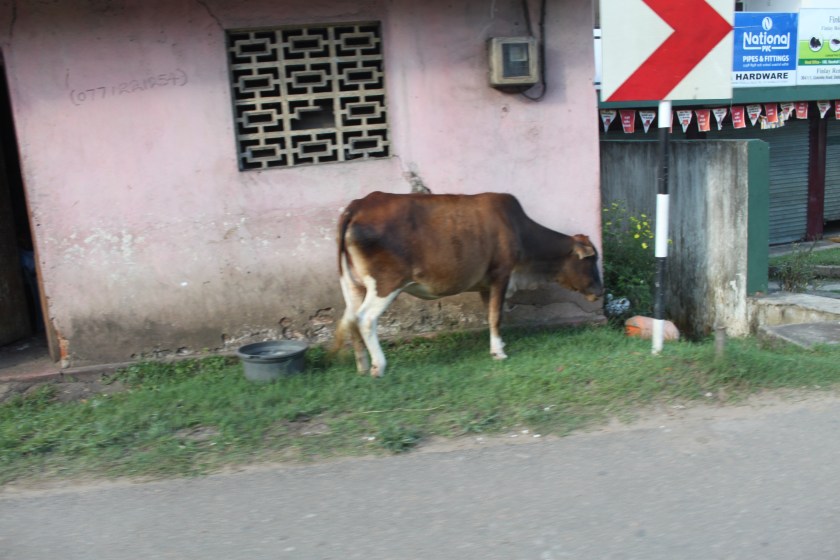 Here’s hoping for a few rays of sunshine tomorrow.
 I busied myself with bits and bobs of paperwork, catching up on emails etc this morning after which I decided not to give in to the elements so I asked a tuk tuk driver to take me somewhere dry! After a bit of negotiation, we settled on a visit to a tea factory which I have to say was fascinating as I doubt the manufacturing process has changed much in hundreds (if not thousands) of years.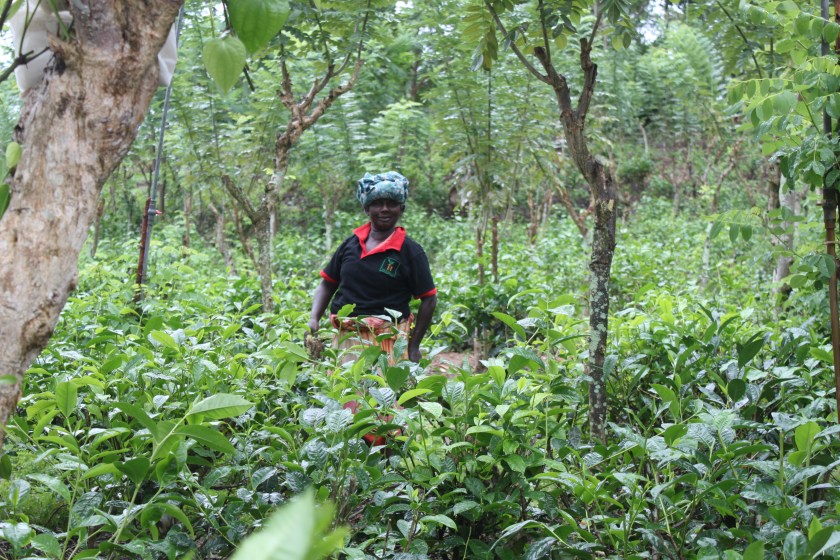
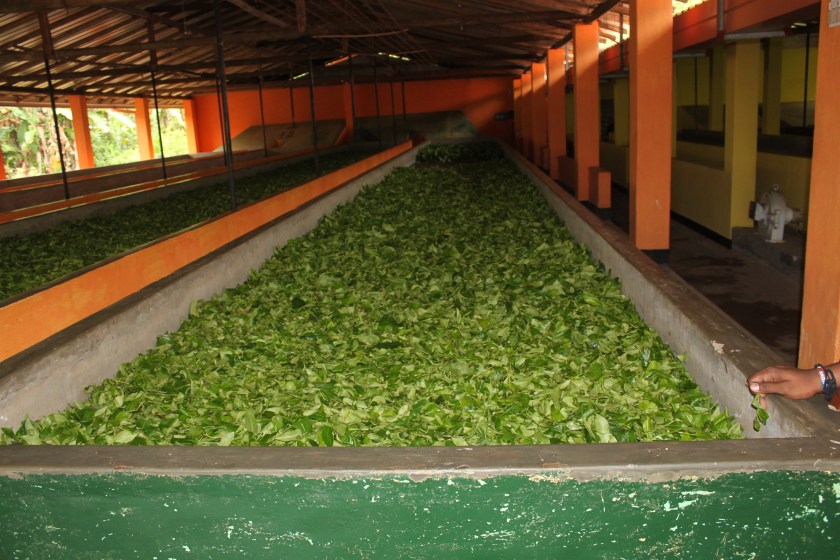 after which they move on to the grinding machine were the leaves are broken up into small pieces.
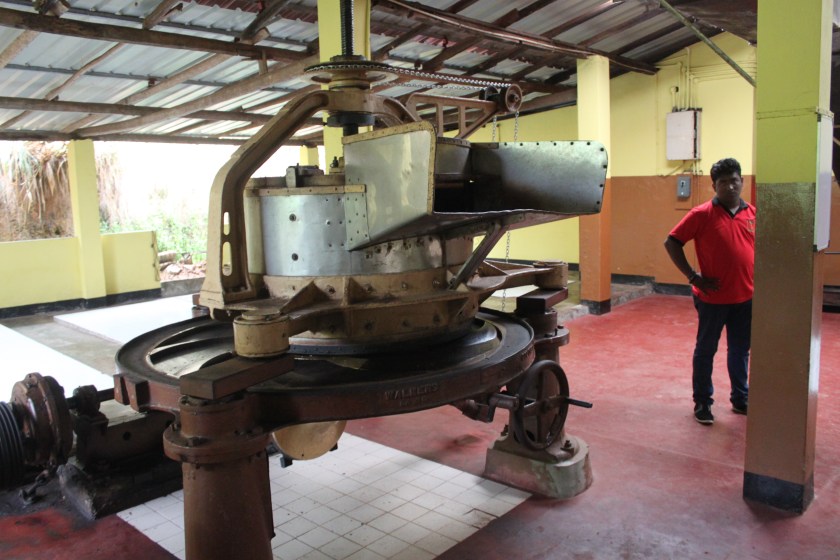 The drying process comes next which is done on a machine that should really be in the Science Museum! It’s 145 years old and still going strong.
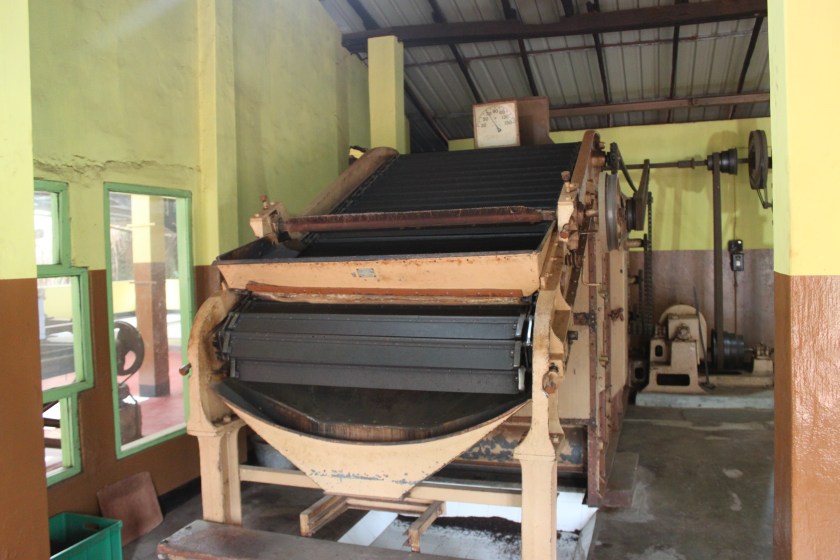 Made in the UK, of course, by the same Belfast company that built the Titanic , I was told.
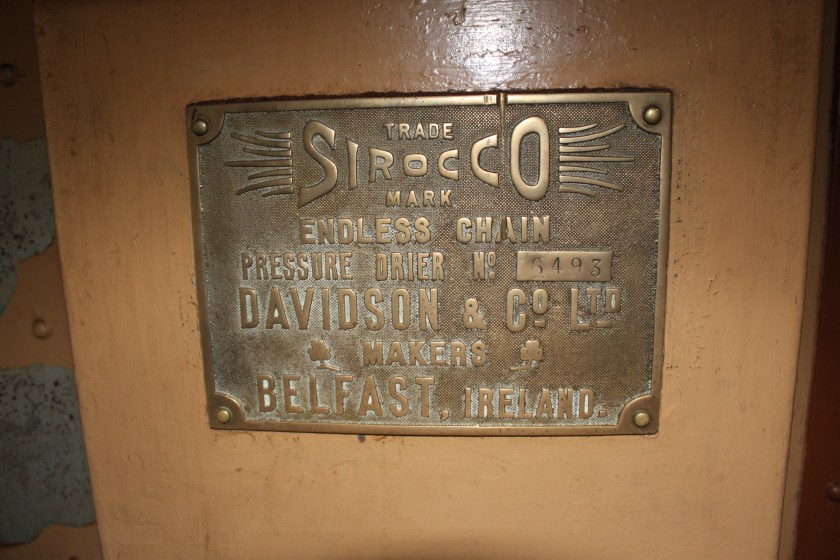 Note that the name plate merely states ‘Ireland’ as, of course, it was in those days.
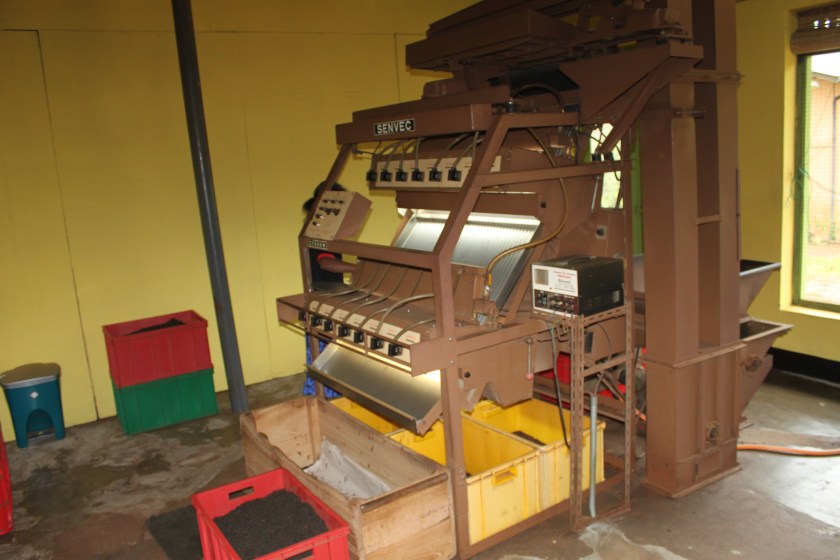 The only modern piece of machinery is Japanese and which electronically sorts the leaves by colour after they have been sorted by size. The smaller the leaf, the stronger the tea seems to be the general rule. The final step is to put the various shades and grades of tea into large bags, take them to the wholesale market in Colombo where they are sold to the likes of Liptons. Typhoo etc who do the final packaging and marketing. Well, I thought it was interesting and it certainly beat staring out of my bedroom window at the rain!
 as is cinnamon.
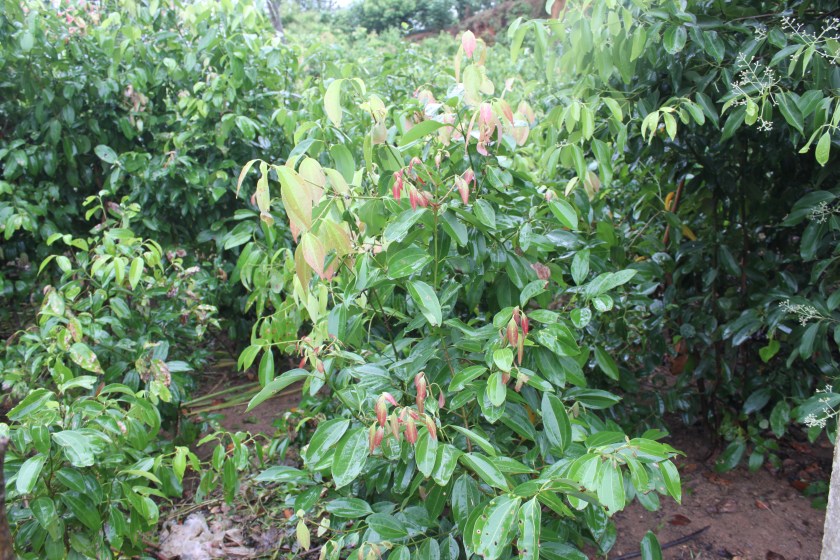 The cinnamon bush (tree?) doesn’t grow very tall but the aroma that a plantation – even a small one – gives out is wonderful. On the way back to my hotel, as the rain had eased a little, Mr Tuk Tuk made a diversion and took me to a small island inhabited by only 5 related families all of whom grow cinnamon bushes.
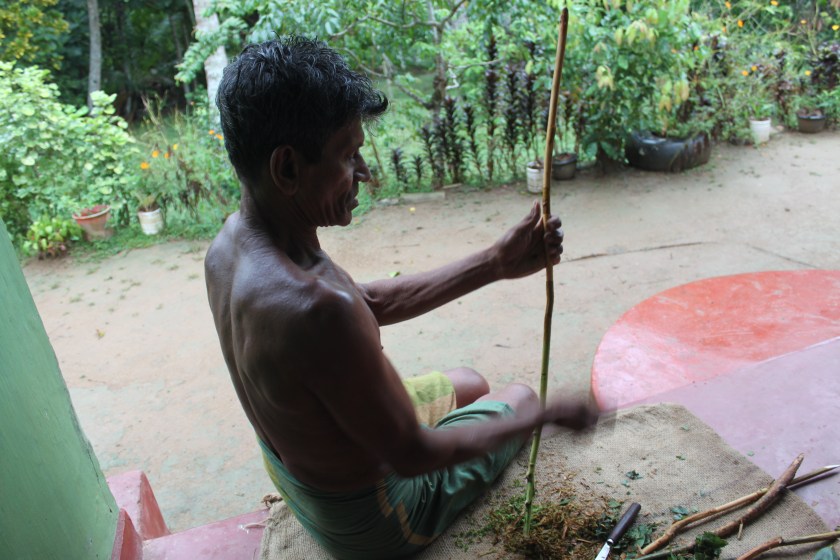 after which the inner bark is peeled off leaving the branch which is used largely for firewood.
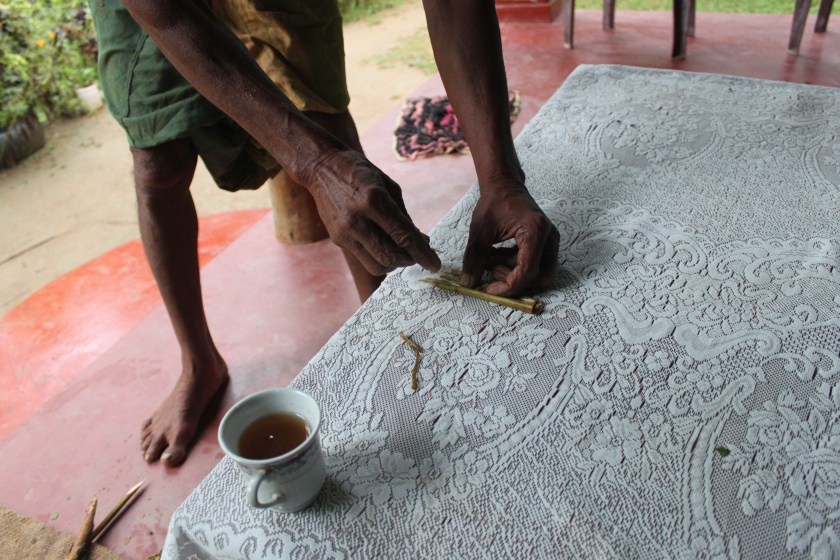 The largest piece of inner bark is then filled with smaller pieces which are left to dry when the colour changes to brown and, hey presto, you have cinnamon sticks! Powdered cinnamon is merely ground cinnamon sticks.
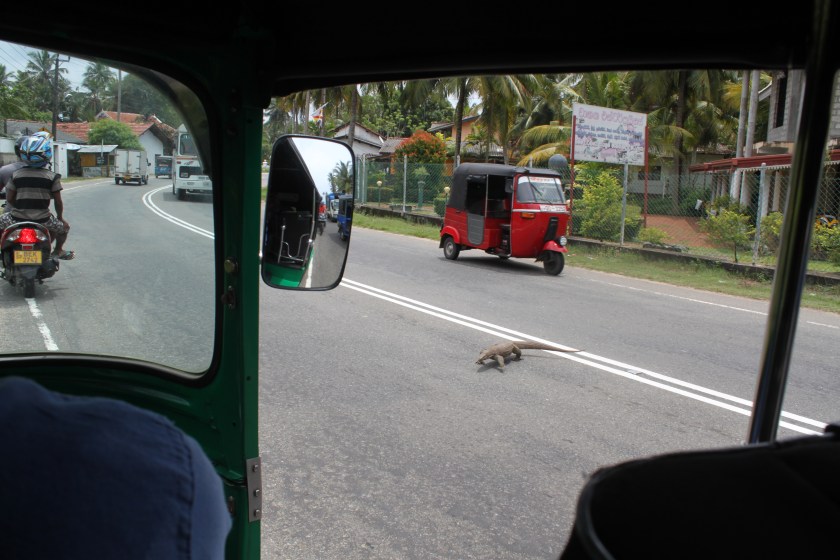
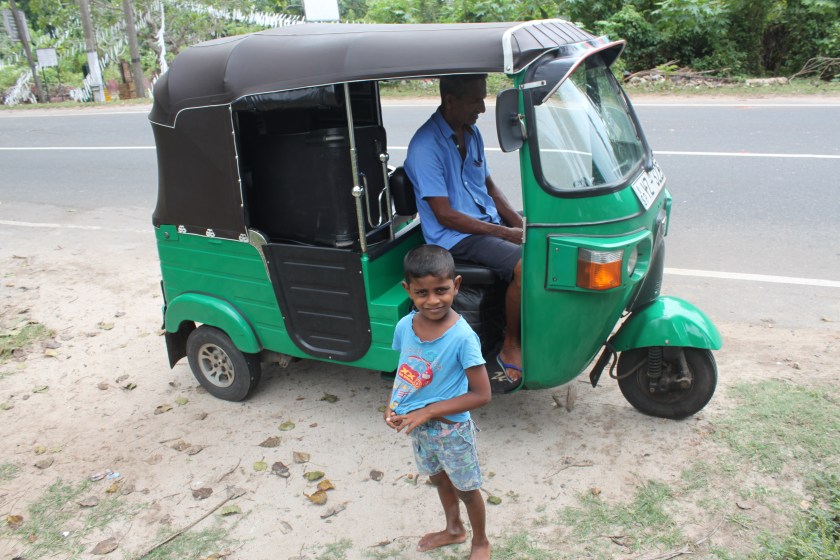 The journey was not quick as there was the occasional unorthodox traffic on the road
 and my very well informed driver wanted to show me a load of fruit bats resting before going out partying at night.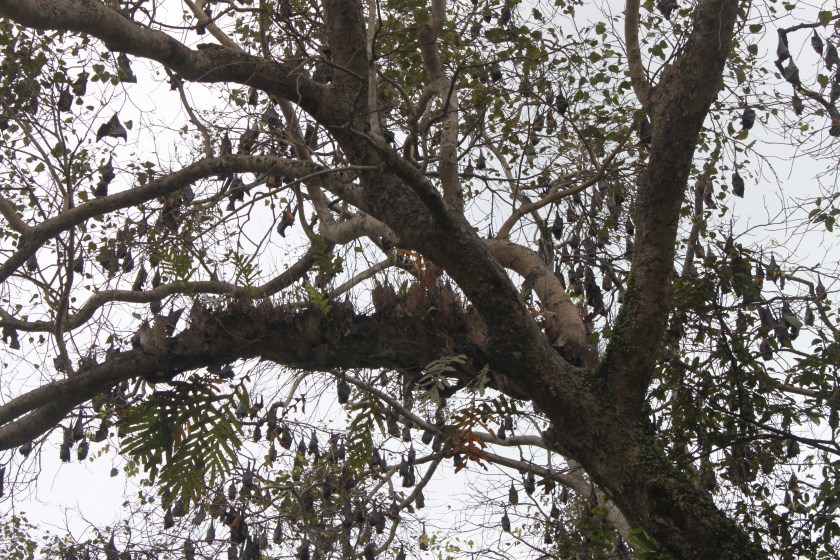

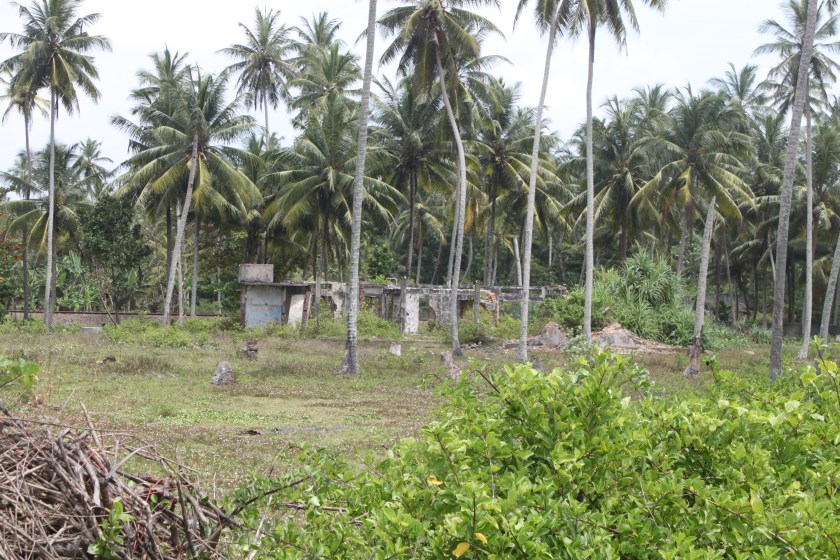 Unlike in Thailand where admittedly there were fewer lives lost, little or no attempt has been made at rebuilding here. Maybe it’s purely lack of funds although money was found to erect a large Buddha memorial.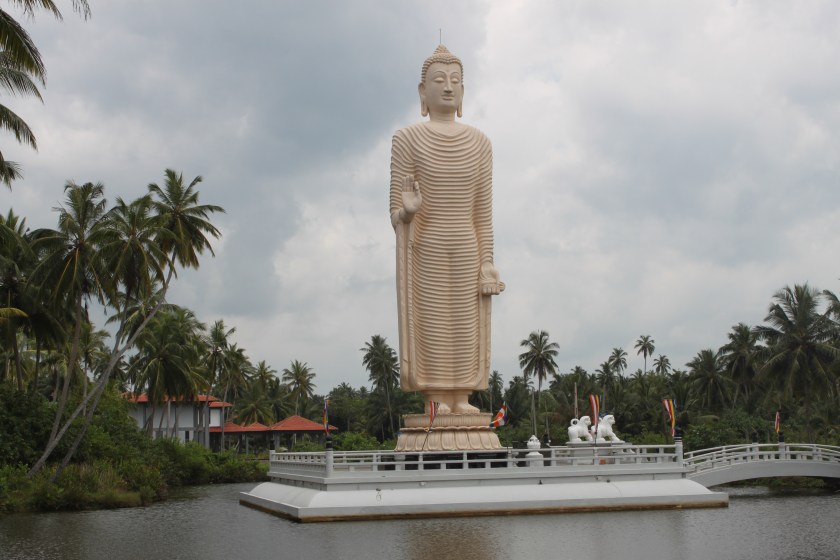
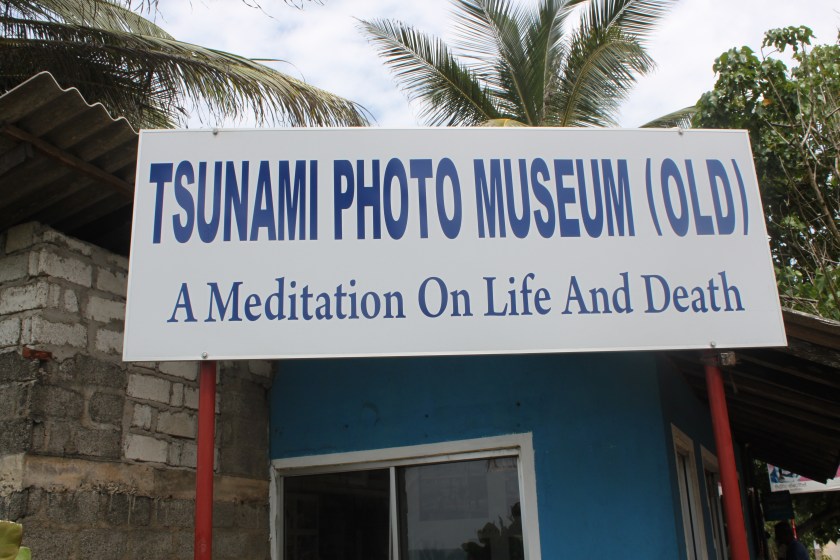 It’s quite an amateurish ‘museum’ but in a way, all the more harrowing for being so
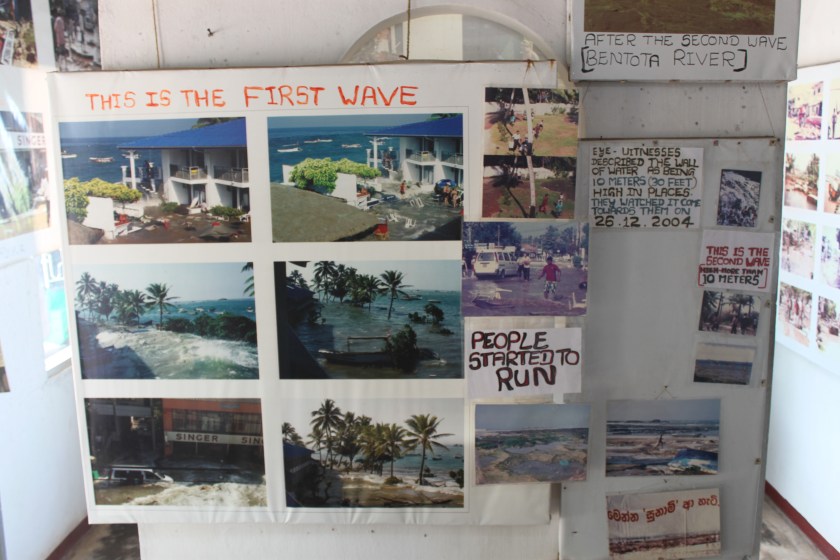 as some of the photos are really very disturbing.
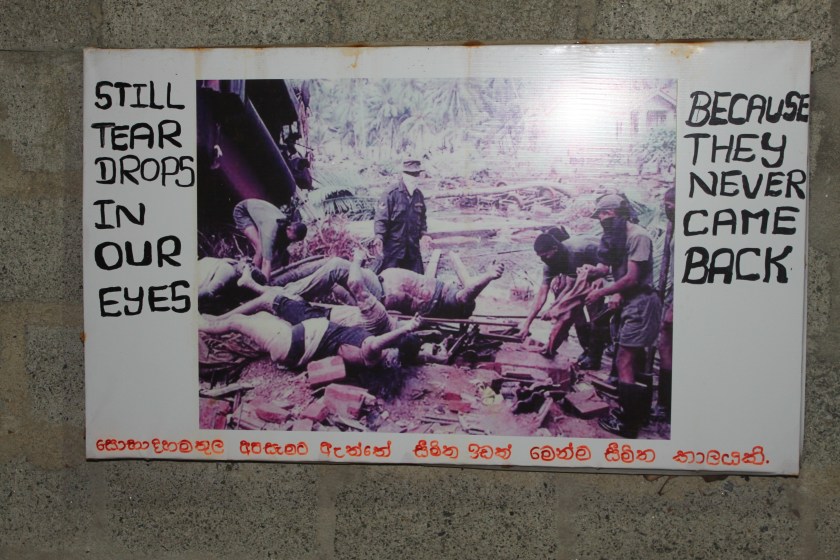 Many of these dreadful images will be etched on my memory for some time as will the thought of a 10 metre high wave crashing down onto this once beautiful shore line, destroying everything in its path before finally coming to rest about 3 kilometres inland. Truly terrible.
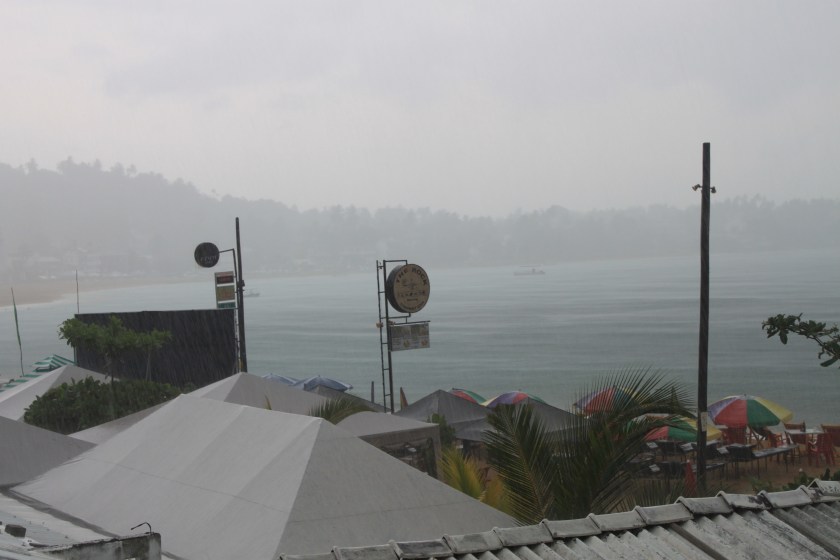 so exploring will have to wait.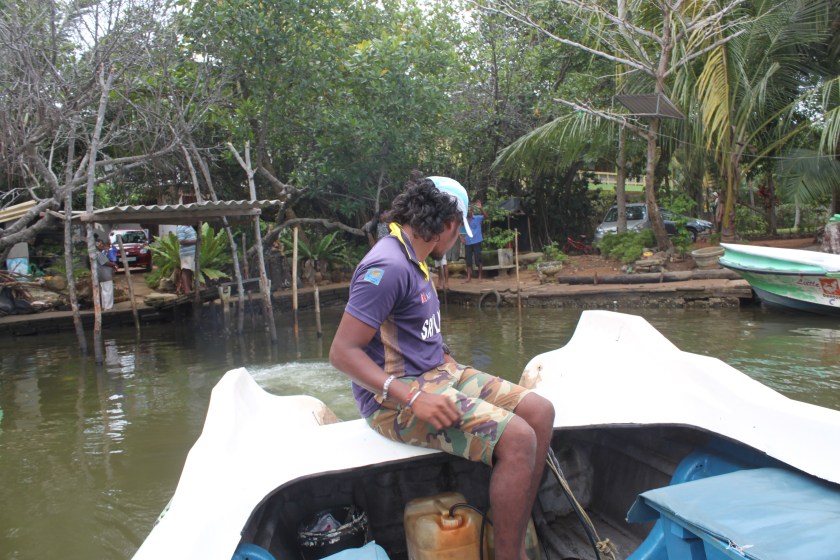
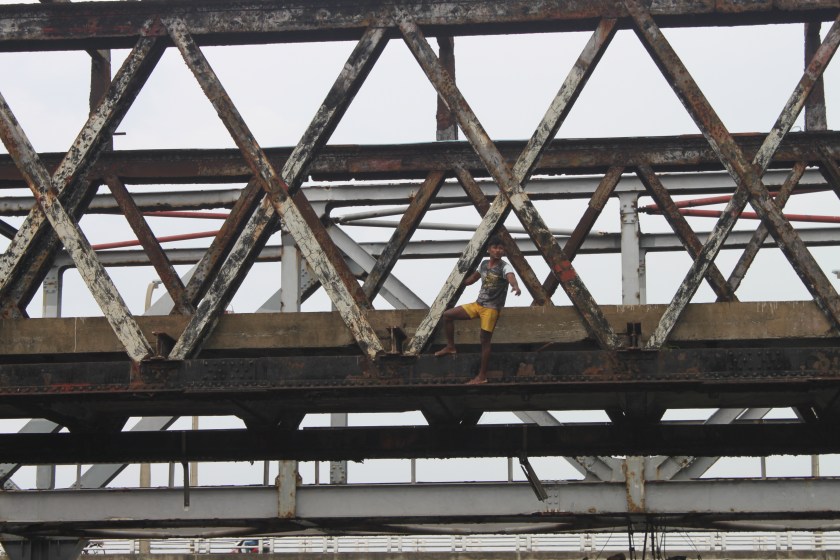
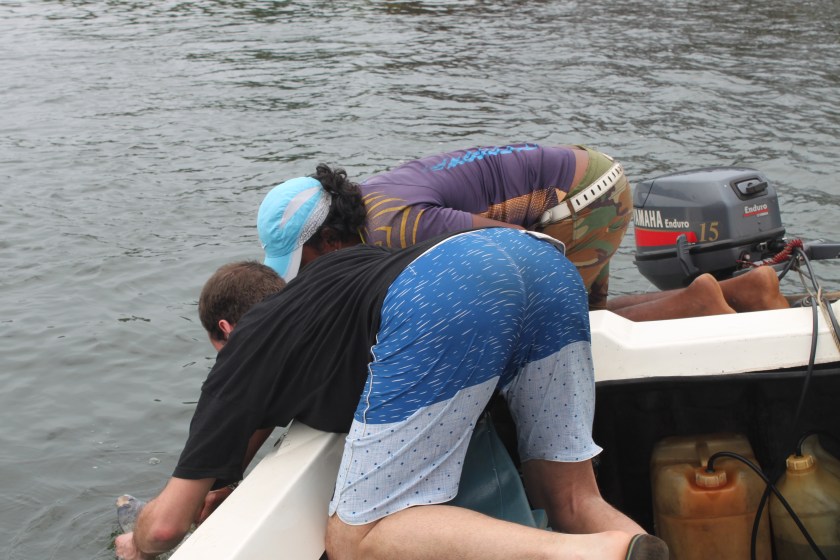
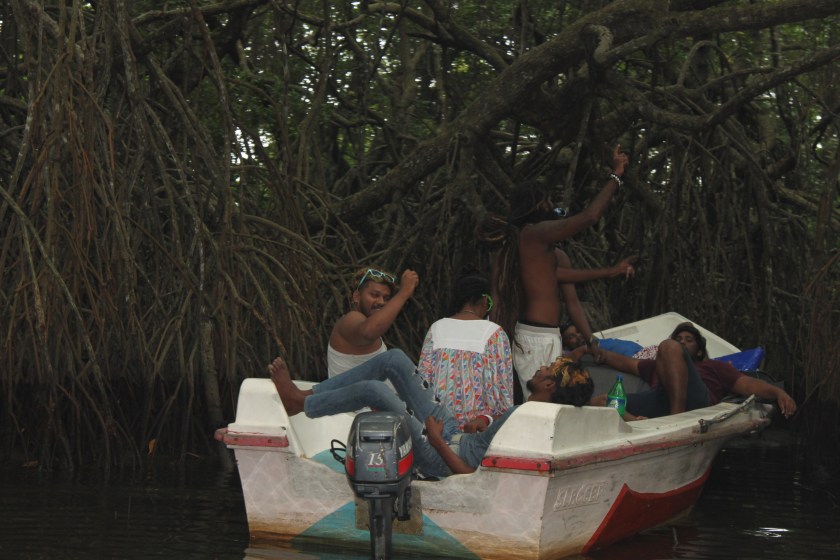
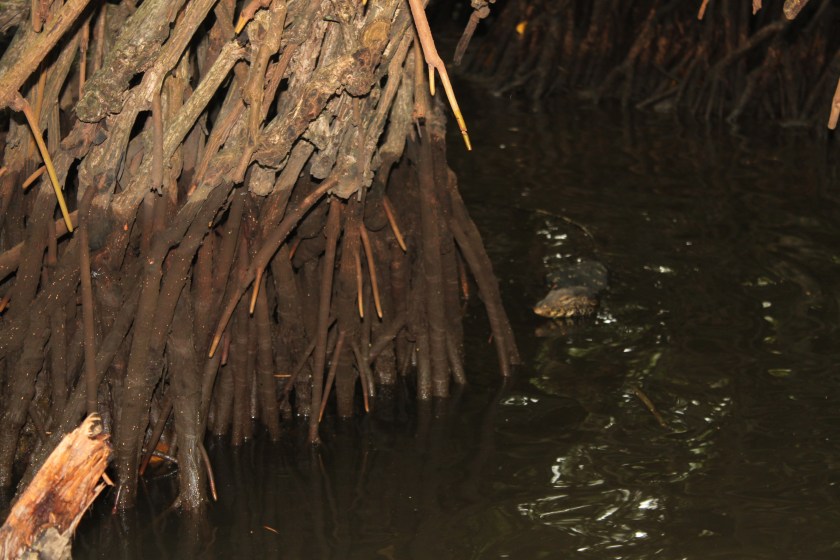
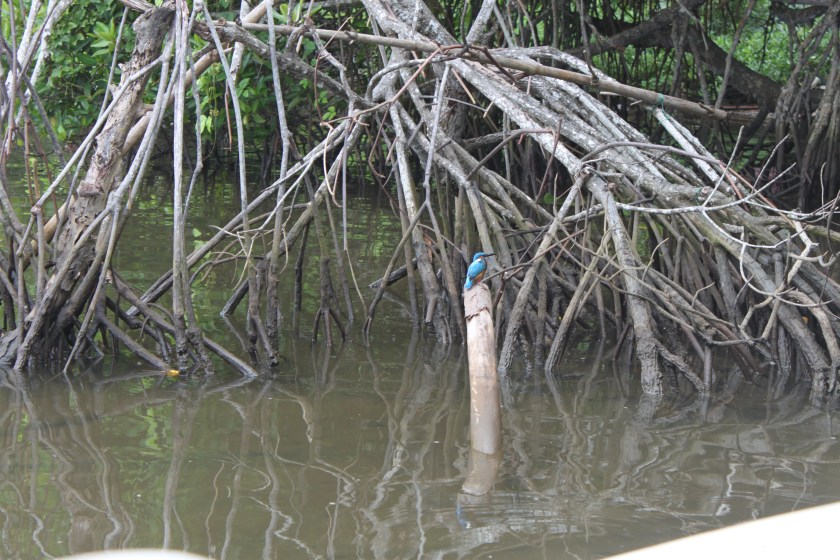
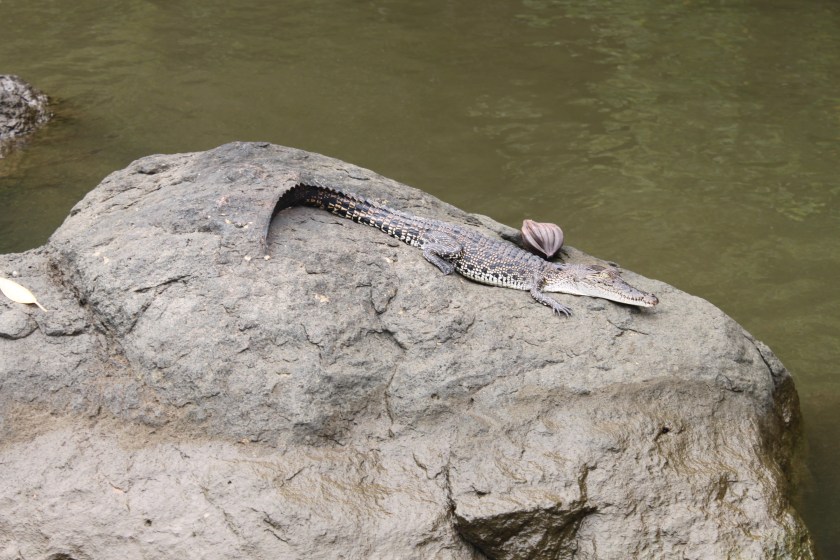
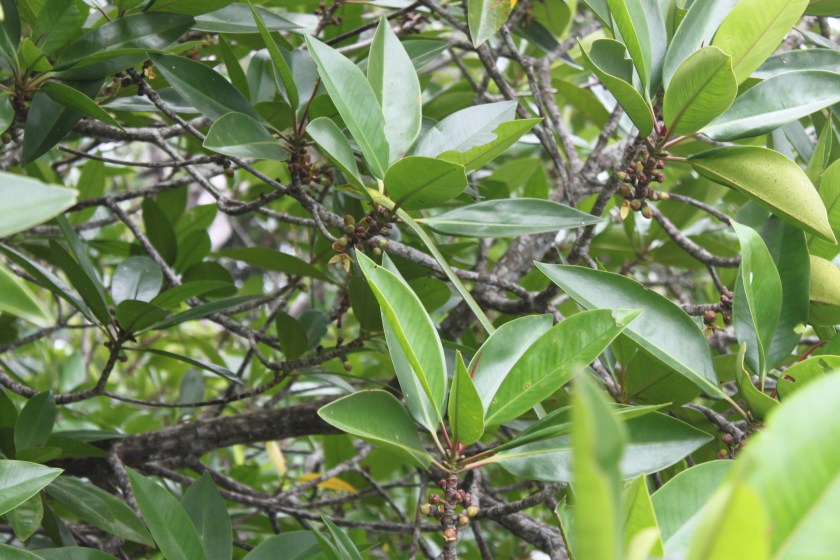
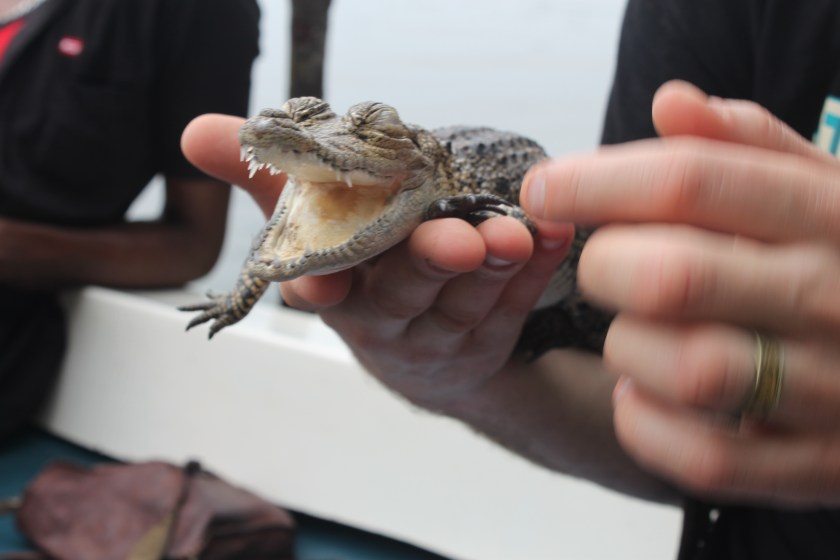
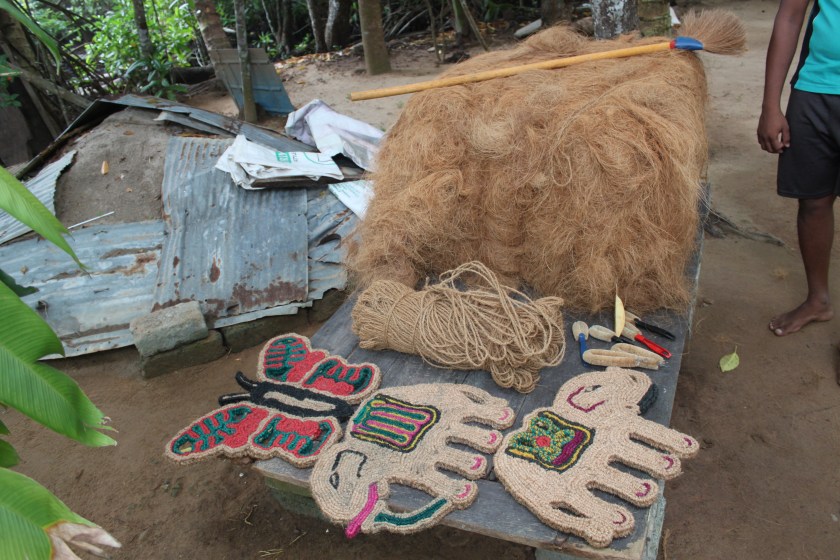
 Inevitably on such tours we had to make a stop so the locals could try (unsuccessfully as it happens) to sell us something. As it turned out, learning how coconuts are used not only for their oil and juice etc but for making ornaments, cups and other utensils plus for weaving was interesting.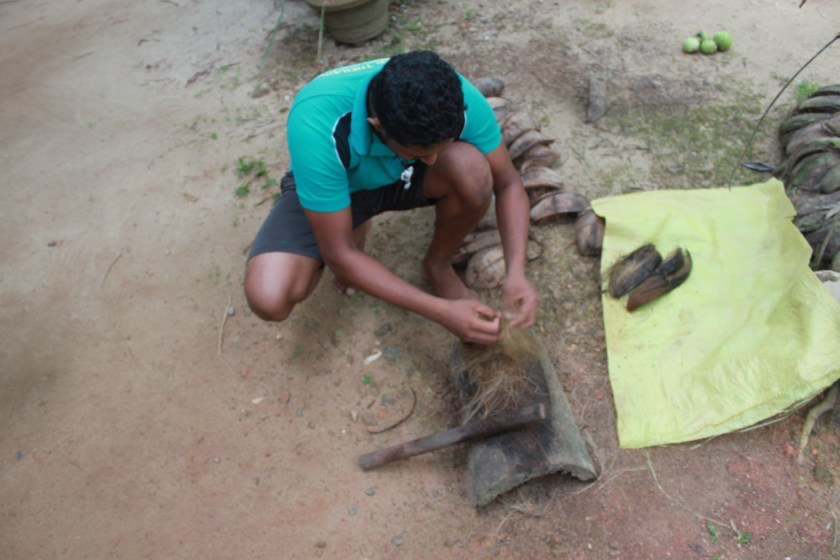
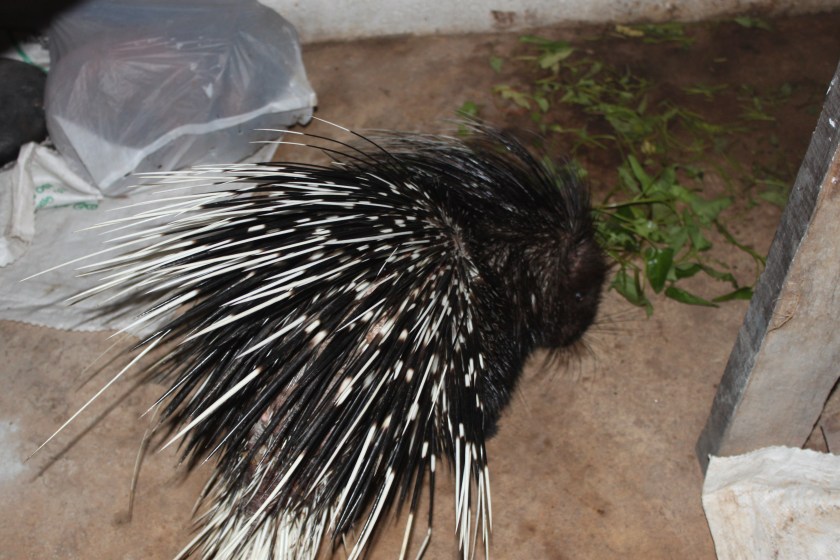
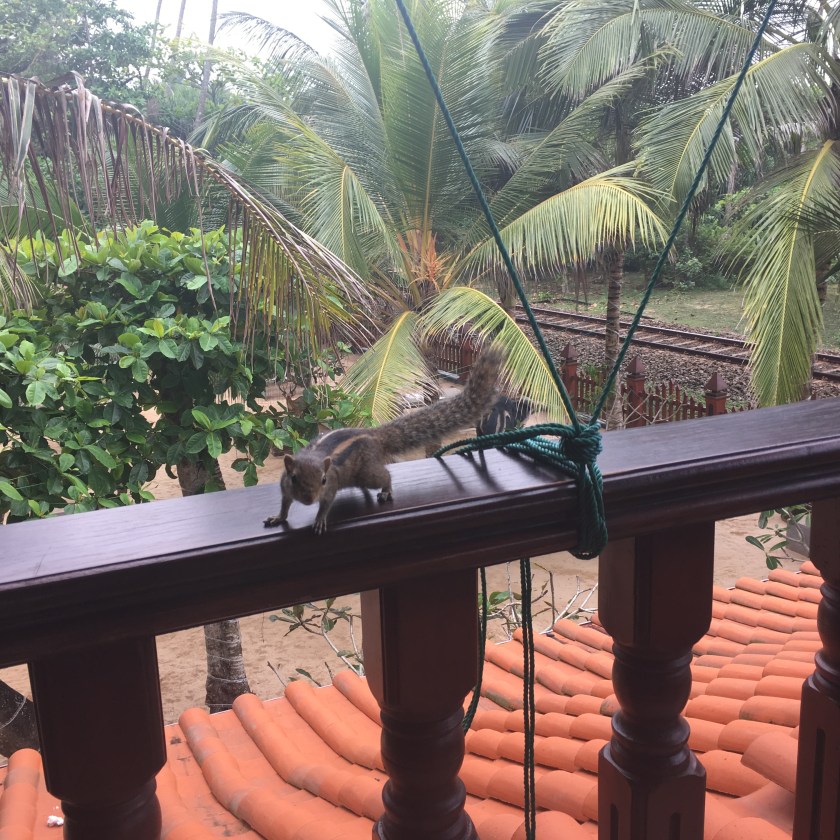
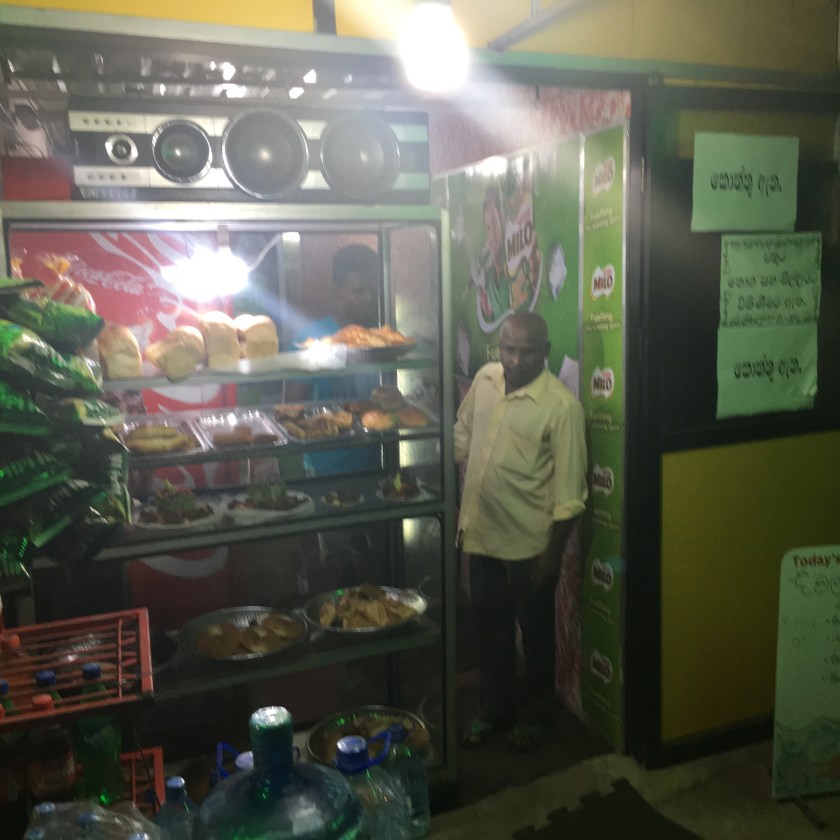

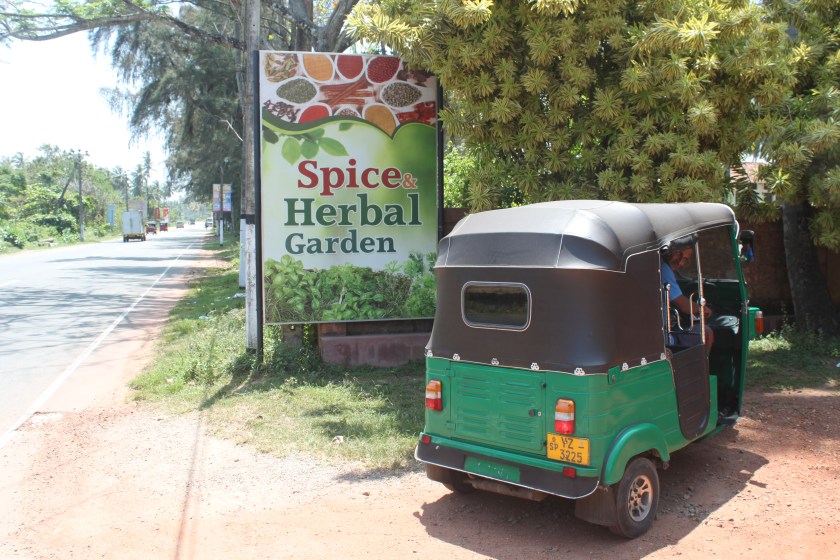
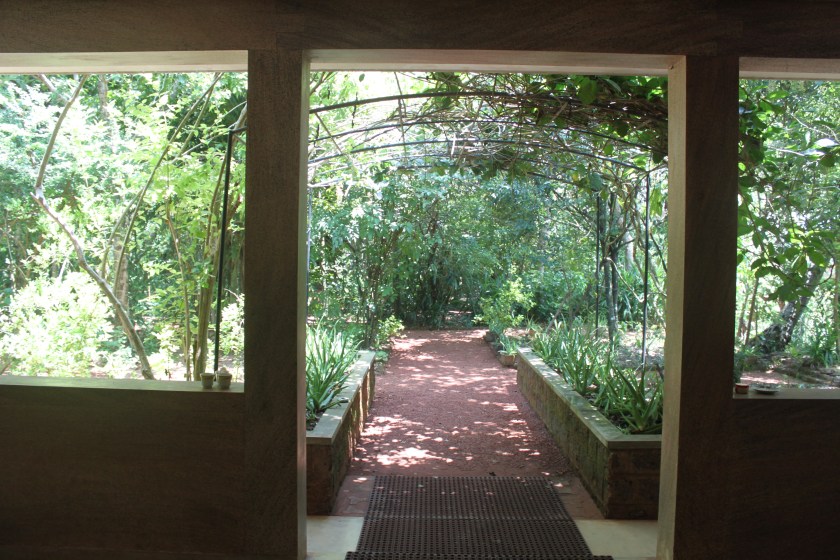
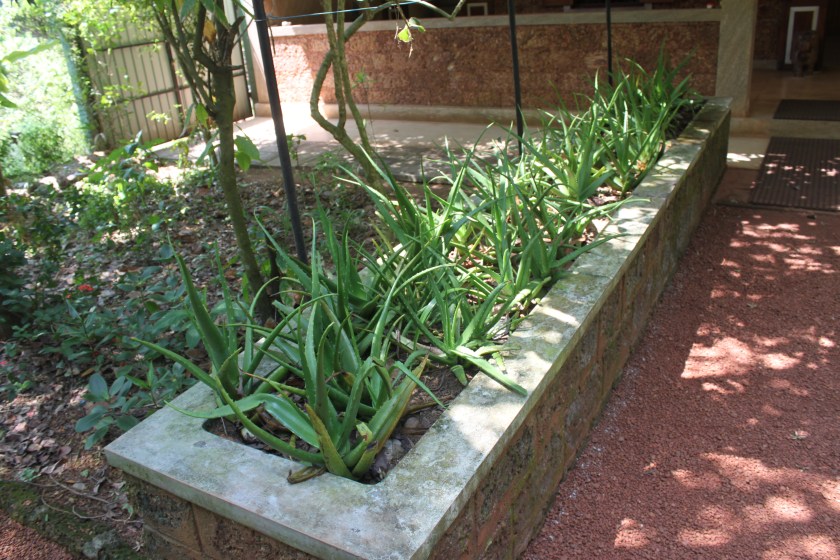
 but the vast majority of species were completely unknown to me.
 After the tour I was given a free (with tip of course) neck and back massage and presented with a leaflet (which I have since mislaid!) listing every ailment under the sun that can be cured with one or more of these potions. Naturally I had to buy something.
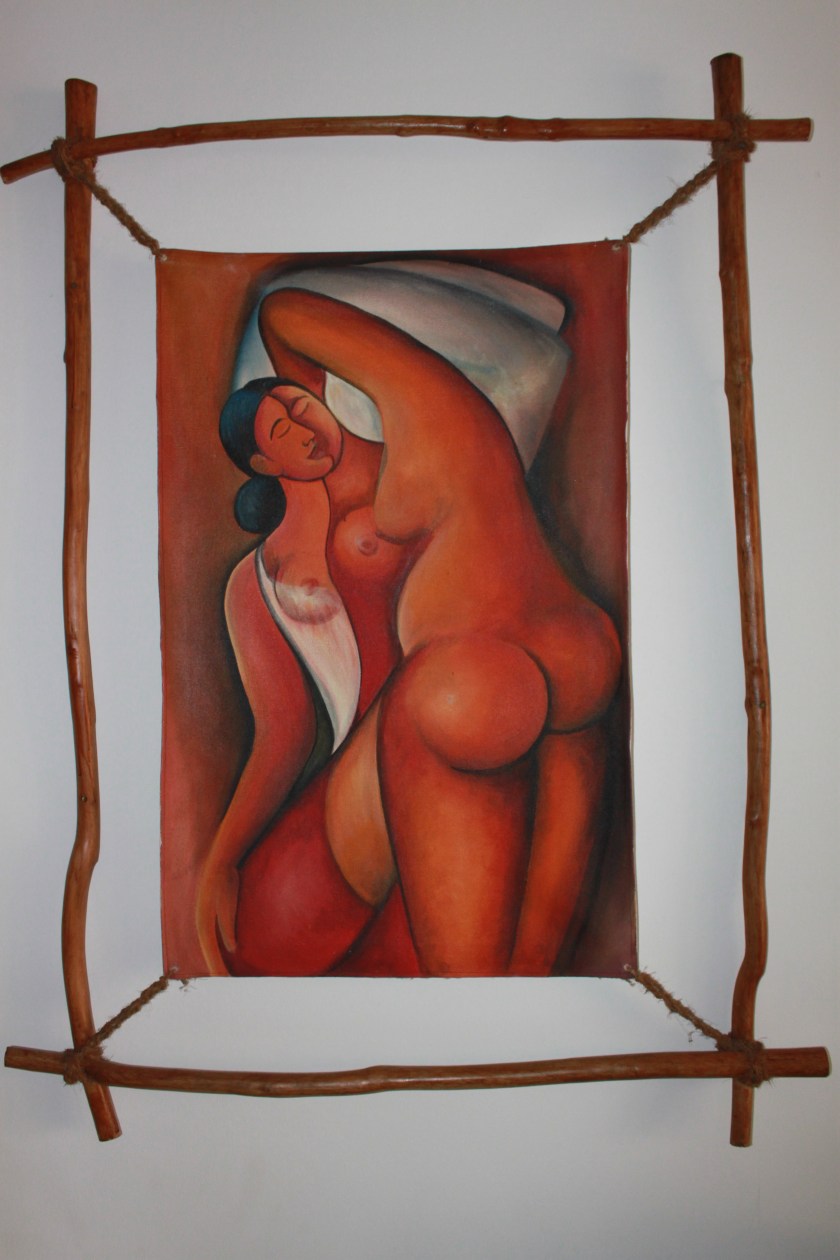 Kama Sutra meets Picasso?

 thelasthurrahsite